
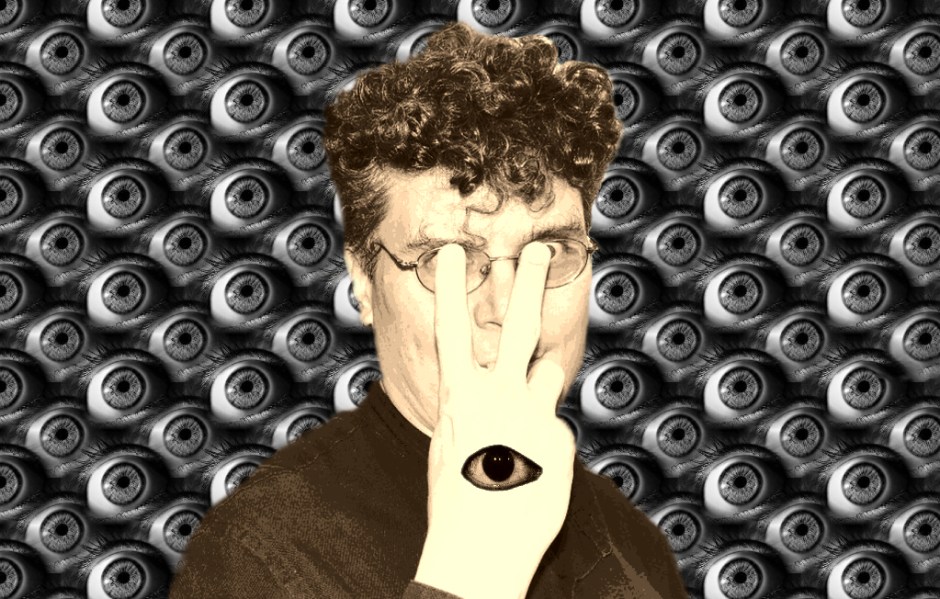
George Salis: Your newest novel, Pest (Clash Books), features a yak protagonist who used to be a human being. This reminds me of Mo Yan’s novel Life and Death Are Wearing Me Out. Can you explain how notions of reincarnation inform this work? And what would you like to reincarnate into if given the choice?

Michael Cisco: The novel isn’t particularly hung up on the idea of reincarnation. It’s one possible explanation for Chalo’s double life. I wouldn’t want to reincarnate at all myself.
GS: Why wouldn’t you want to reincarnate?
MC: I’m the only me there’s going to be. One’s enough!
GS: I’m curious about the initial shiver of inspiration behind Pest.
MC: That’s hard to pin down. I had a crowd of ideas already, and the image of a person reincarnated as a yak, looking back on his life as a human being, sort of aligned all the other ideas and gave them emotional heft.
GS: In the spirit of The Divinity Student, what page from a book would you like to have sewn inside of you and why?
MC: I am nothing but a collection of pages from books, so just about any book I’ve read and enjoyed.
GS: This is a guest question from Matthew Taylor Blais: “Ambiguity can be a cop-out for the lesser artist, something to hide behind, to avoid following through. Disparate, interest-piquing elements that never cohere, leaving it ‘up to the reader.’ But your stories in Antisocieties are deepened by their ambiguity—it’s earned. How do you strike that balance, how do you know when to follow through and when to obfuscate? What was your aim in leaving so much of what makes these stories unsettling unplumbed, beyond the generally disturbing nature of the unknown?”
MC: To me, that’s just realism. I never obfuscate. I try to be as faithful as I can be to my own confusion. As a rule, the more I think about something, the more questions I find to ask about it. There is a more or less natural point of exhaustion for questions when you can’t go any further, but that’s the only really clear limit.
GS: Can you tell me about the creative impetus for Animal Money? Also, how did the world of cryptocurrency inform the novel if at all?

MC: I guess the very first impetus came when I ran across a quote from someone saying that what makes realistic fiction realistic is money. That set me wondering whether or not it would be possible to write a fantasy about money. Crypto was not as big at the time I was writing Animal Money, but it was part of a bigger picture that made it very clear just how much fantasy is involved in economics.
GS: You’ve described your work as de-genred. What do you mean by that exactly and have you attempted to break down other constraints that may or may not be subconscious in nature, such as those that might relate to gender, ethnicity, or even the overarching constraints of being a member of Homo sapiens?
To read the full interview, consider supporting the efforts of The Collidescope on Patreon. You’ll get access to other awesome benefits as well.

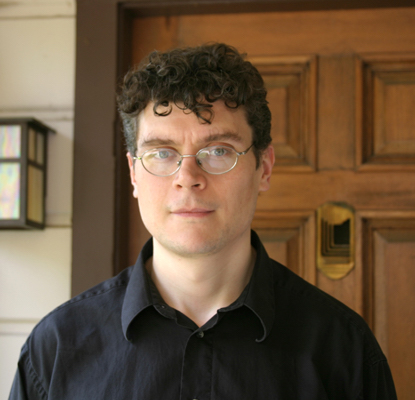
Michael Cisco is an American writer, Deleuzian academic, teacher, and translator currently living in New York City. He is best known for his first novel, The Divinity Student, winner of the International Horror Guild Award for Best First Novel of 1999. His novel The Great Lover was nominated for the 2011 Shirley Jackson Award for Best Novel of the Year and declared the Best Weird Novel of 2011 by the Weird Fiction Review. Other fiction includes the short story collections Secret Hours and Antisocieties. He teaches at CUNY Hostos.

George Salis is the author of Sea Above, Sun Below. His fiction is featured in The Dark, Black Dandy, Zizzle Literary Magazine, House of Zolo, Three Crows Magazine, and elsewhere. His criticism has appeared in Isacoustic, Atticus Review, and The Tishman Review, and his science article on the mechanics of natural evil was featured in Skeptic. He is currently working on an encyclopedic novel titled Morphological Echoes. He has taught in Bulgaria, China, and Poland. He’s the winner of the Tom La Farge Award for Innovative Writing. Find him on Facebook, Goodreads, Instagram, Twitter, and at www.GeorgeSalis.com.
The Collidescope is an affiliate of Bookshop.org and will earn a small commission if you click through those specific links and make a purchase.
 The Collidescope