
A bustling circus rolled into the single train station of Indio, California, one sun-soaked afternoon. Indio sat still earlier that morning, its dusty streets hollowed out by a war that shipped its men off to the Pacific theatre.
At the edge of platform 1, demarcated as if there were other train lines, stood a boy with green eyes, a spark of life in this bone-dry town. He had been spared the quiet vanishings, his youth still casting a glow too bright for bloodthirsty fingers to claim. His hazelnut hair, curling faintly at the edges, had come from his father, his defiant demeanor more resemblant of his mother. A crown sat balanced atop him, a crooked ring of rusty silver spurs collected through westward travels, engraved only with his first name: Sonny. With each tilt of the head, the spurs jingled softly, a patchwork tambourine announcing every motion. He wore little more than short brown trousers, striped knee socks and a Navajo-patterned quilt, its baby blue and beige motifs wrapped snug over his bony shoulders and bare chest, contrasting greatly with his pale complexion. He stood up straight like a meerkat scanning the floors of the desert, his bare toes curling over the edge of the sunbaked driftwood planks of the platform as the train rolled into view.
It rumbled closer, its groaning momentum shaking the bones of the earth around him. With a jolting shudder, the train lurched to a halt, a plume of steam curling in its wake, its sharp, commanding whistle summoning the lone boy as if by decree. Before the steam had dissipated, the station exploded into a blur of vivid color and sound: red velvet-clothed elephants trumpeted, tangerine-hued tigers gnarled their teeth behind gilded bars, earthy ropes swung high above like tree vines catching the sunlight. Crimson and indigo fabrics snapped in the wind, their banners boasting of marvels that did not belong to a place like this—feats of wonder, daring, and magic.
Sonny was no stranger to wonder. In wartime London, where buzz bombs and V-2 rockets shook windows and frayed nerves, he had once pressed his delicate nose to the dirty glass of an electronics shop window, mesmerized by grainy footage of the Barnum & Bailey Circus. Animals he’d only seen standing still in schoolbooks paraded graciously in black and white, alongside people more curious and daring than any he’d met in sixth grade. At breakfast, he’d retell stories of it all while his mother smiled faintly over burnt toast, sitting in the chair that used to belong to his father. She’d try to mask the strain that the blitz had etched into her resting expression.
London had been cloaked in gray far more encompassing than its usual muggy weather. A heavy haze settled over the streets, where ration lines stretched past infinity beneath drizzles of cold rain. Low clouds above shouted rhythmic thunder not borne of storms but of distant anti-aircraft gunners, trying their best to swat groups of German flies that buzzed all around. The city then was running on little more than scraps of morale, thin and frayed at the edges. When Sonny sat perched on his twin mattress and peered at red-brick chimneys and hanging metal eaves, the melancholy was an easy sight to see. He would lie there for hours, though, lost in a blissful fantasy the way only a child could.
Here, Sonny’s crown of spurs was a recognized symbol. A motley crew of performers would exit the train in single file, each of them plucked from some crooked alley or shadowy harbor across the seven seas. As they knelt at his bare feet, they paid homage to the boy wearing the crown, their eyes recognizing the king who stood before them.
Amethyst, the monkey tamer, stood tall with a stance as firm as her careful blue eyes. Her long blonde hair shimmered like a sunlit curtain as it framed her determined face. She commanded a troupe of chattering capuchins and spider monkeys with an ease that came from experience, though she was only twice Sonny’s age. Rocco, the sword-swallower, brought with him an air of mischief, his crooked grin as sharp and daring as the blades he consumed. His smile never failed to send Sonny into fits of wide-mouthed toothy laughter. The last of Sonny’s gang was Gonzo, the striped-shirted strongman who wore a twisted graying mustache that stretched like the wings of an RAF Spitfire. Towering yet gentle, he rested a wordless hand on Sonny’s shoulder—a subtle offering of camaraderie and pride.
They were his inner circle, the dukes of the circus and the barons of his kingdom. Behind them, the caravan of performers, roustabouts, and animal handlers continued. The steam locomotive would carry them together from town to town, where they’d pitch their grand three-pointed tent wherever the dusty desert opened its arms wide enough. Each stop became a stage where stories were spun in dust and starlight. For a week, the illusory crystal kingdom would rise from the earth, shimmering into existence beneath a sky speckled with celestial diamonds.
The people of Indio had lost the spirit that once gave this place vitality. With every father, son, and brother gone, women and children were left behind to weave routine from absence, stitching together a life of quiet resilience. Against this dimming backdrop, the circus stood in sharp contrast—its technicolor palette and jubilant music stood as an act of resonant defiance against this reality-turned-tragedy.
For an hour each evening, the boy king reigned beneath the soaring heights of the big top. He conjured wonders, pulling doves out of thin air in a flurry of white wings, walking trapeze lines that hung taut like silver threads spun from twilight itself. Tigers bowed low before him, their striped forms moving as if under a spell. A one-man band, the boy king rattled tambourines, stomped on a makeshift drum, and sent waves of laughter rippling through the crowd until even the most sorrowful faces softened with joy.
The performers buzzed with feverish energy, preparing for their most dazzling night yet—the marquee show. In the mind of the king, it would be a spectacle beyond compare, a performance so electrifying, so iconic, that its legend would ripple far beyond the borders of the Golden State. Paperboys would shout their praises from street corners while whispers of its magic would race along the tracks, arriving at future stops long before the performers did.
Inside the main tent that evening, the boy stood on a crate, his Navajo blanket draped regally over his shoulders like a cape. His crown of spurs jingled slightly as he pointed a leather whip toward his troupe.
“Tonight,” he declared to Amethyst, Rocco, and Gonzo, “we’ll give Indio what it’s never dared dream of. We’ll outshine the stars. We’ll make them believe again!”
Rocco grinned, “What do you have in mind?”
Gonzo folded his arms, nodding his head steadily. “Let’s hear it, boss.”
Amethyst dusted off her trousers, her cerulean eyes gleaming with a quiet acknowledgment. Yet, for a fleeting moment, a shadow of sorrow crossed her face as she pondered the weight the people of Indio carried in weary hearts and teary gazes.
And so, they rehearsed in hushed tones, their plans soon to be ignited in a blaze of magic and allure. The boy king would begin the show perched high atop a platform near the tent’s pinnacle, the spotlight capturing him like a bomber illuminated in a night raid. He’d descend on the trapeze, perform impossible feats, release doves into the crowd, and juggle flaming torches. Amethyst would command her monkeys in a dazzling routine, followed by Rocco’s breathtaking sword-swallowing and Gonzo’s displays of brute strength. The finale, however, would be unlike anything ever showcased: a battle of danger and heroism against a terrible foe.
The boy king would meet his match in an adversary of equal title—the King Cobra. A king of darkness, its hiss whispering of misfortune, it would arrive wreathed in a living tide of desert vipers. This was more than an act; it was a saga written in scales and venom, a battle between light and encroaching darkness.
As the sun dipped below the horizon, the desert air turned crisp, and the town gathered in hushed anticipation. Beneath the billowing stripes of the big top, kerosene lamps flickered, casting pools of gold against the canvas. The band tuned their instruments, plucking stray notes and half-formed melodies into the expectant air. In the stands, mothers pulled their children close, trembling old hands gripped seat edges, and a few men with missing limbs and scarred faces sat patiently, taking in the unfamiliar earthy aroma of roasted peanuts and sawdust.
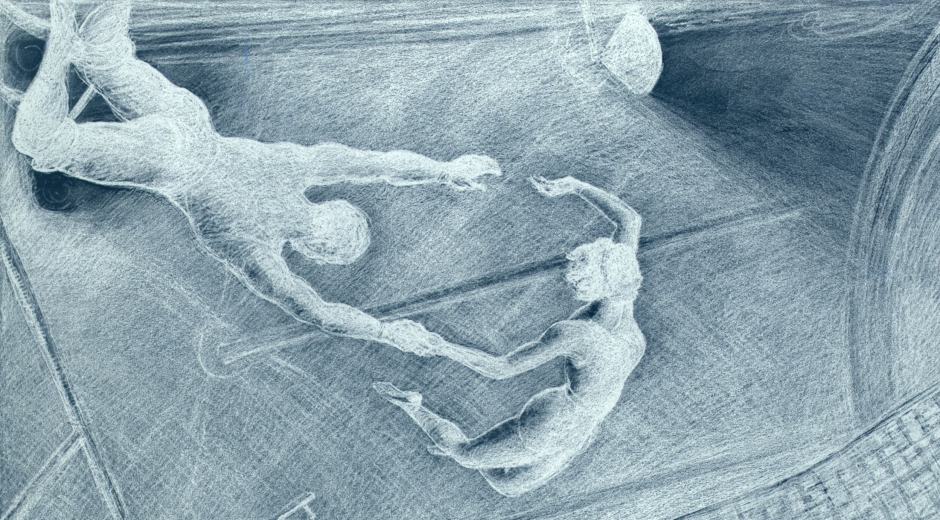
When the boy king appeared before them, it was in silence. Suspended upside down from a trapeze high above, he swung slowly into the spotlight, a tiny figure captured in a pool of light. A gasp rippled through the crowd as he flipped, catching the bar with his knees, then his ankles, then his hands in one fluid motion. He soared back and forth before landing gently on a striped platform. He bowed low, tipping his crown before releasing a flurry of doves from his sleeves. The audience erupted, children cheering and old, withered men shouting in surprise.
Amethyst followed, guiding her company of monkeys in a parade of mayhem. The little creatures tumbled and chattered, balancing on railings and stealing peanuts to the delight of the crowd. They formed a living pyramid, their tiny red hats teetering as they perched on one another’s shoulders. With soft whistles and quick finger snaps, Amethyst coaxed them through an elaborate routine that sent waves of laughter roaring through the tent.
Next up was Rocco. He stepped into the spotlight, a slick blade in his hand. With a flourish, he swallowed it to the hilt, then juggled fiery torches, dripping syrupy blots of kerosene around him. The flames cast wild shadows on his face, the reflection in his single visible eye gleaming like a mischievous star. When he bowed, the audience whistled and stomped, the roar of approval nearly as loud as the sound of a passing train. Smoke from tobacco pipes drifted lazily through the spotlight, curling like phantom clouds in the still air.
An intermission followed, the curtains closing for a few brief minutes as the king’s raspy voice boomed overhead, promising even greater wonders to come. Behind the curtain, the boy grinned at Rocco and Amethyst, his dimples carving deep into his freckled cheeks, barely concealing the thrill dancing in his eyes. The pair responded with subtle smiles, their usual stoic façade wavering ever so slightly in an unspoken admission that tonight carried a special kind of energy. “Gonzo,” the boy said, turning to the strongman. “Are you ready?”
Gonzo gave a slow nod, his expression both tranquil and excited. He was a man of few words, yet he needed none—his confidence was all the king required.
The boy adjusted his crown and eased the curtain aside, stealing a glance at the people of Indio as they drifted back to their seats, concessions in hand. It was the king’s conviction that tonight they would be children once more.
Gonzo stepped into the spotlight, his towering frame casting a shadow over the crowd. “Strong as a steam locomotive,” the posters had said, plastered on every alley wall and utility pole in Indio. He began his cinderblock routine, stacking and breaking the heavy blocks with effortless motions. With each crack of stone, the crowd gasped and cheered louder. He climbed atop a precarious tower of barrels, flexing and striking exaggerated poses with theatrical flair. The drums rolled, and with a dramatic grunt, he hoisted a heavy trunk high above his head as if it weighed no more than a child’s toy.
Then the king returned to the stage, weaving circles around Gonzo, his cape trailing behind him like a flag on the wind, a flash of baby blue and beige. The music softened, and the boy king came to a halt at the center of the ring with a wide and radiant smile. With a dramatic twist of the wrist, he cracked the whip, calling the crowd to attention.
“Ladies and gentlemen, boys and girls, our story isn’t quite finished! We face a great enemy tonight. Brace yourselves!”
The tent’s lights dimmed, and a hush swept over the expectant crowd. From somewhere unseen, a sound began—a faint slithering, soft as sand shifting underfoot. It grew louder, a dry, rasping hiss that bled out from the shadows. A drum roll quickened, beating like a second heart. The boy king’s voice rang out over the rising din.
“Before you all, I will face this formidable foe!”
From beside the ring, the King Cobra emerged. Enormous in size, its glossy scales carried the color of midnight oil, its eyes like burning embers. The serpent slithered forward, its forked tongue flickering, tasting the fear in the air, and then the snake coiled itself into a shape as ancient as curses.
Dozens of smaller serpents slithered forth, summoned from the secret burrows of the mountains and the jagged canyons beyond. Drawn by the Cobra’s will, their sinuous bodies pooled into a writhing tide, circling the boy in an undulating mass of reptilian villainy.
Amethyst acted first. With a sharp whistle, she sent her monkeys into battle. The nimble creatures shrieked and leapt into the fray, darting and swiping at the serpents. For a moment, it looked like they’d drive the snakes back, but the monkeys quickly became overwhelmed by the sheer number of snakes. They struck with hissing fangs, forcing the monkeys to retreat. Amethyst caught her trembling troupe, cradling them in her arms like frightened children.
Rocco stepped up, drawing a sword from his throat—an impossible trick that dazzled the crowd even in such a panic. Swinging the blade wide, he scattered the advancing snakes, their slippery bodies recoiling from the metallic glint. But the horde struck back with quick strikes, causing him to drop his blade and retreat to the safety of the ring’s edge.
Gonzo took his turn with a rare worried expression on his face. He heaved wooden barrels into the mass of serpents, toppling dozens of them. It created a brief break in the serpents’ lightning advancement, but it lasted only a few moments before the snakes surged forward again, their hissing chorus growing louder.
The crowd watched in rapt silence, hearts pounding.
The king saw his moment. The others had done their part, holding back the line long enough. The boy leapt for a trapeze line hanging above the chaos. Swinging high, he tucked his legs to avoid the sea of snapping jaws and flared fangs below. The King Cobra, rising above the writhing swarm, lunged—a blur of coiled muscle and venomous fangs. Its massive head shot upward, missing him by a hair. The boy arced through the air, sweeping in a graceful loop just above the Cobra’s head. Mid-flight, he snapped his whip, its sharp crack sending the writhing sea of serpents into an instinctive recoil.
Landing nimbly behind the Cobra, he startled the beast. The Cobra reared back, spitting venom into the open air, coming down in splotches like V-2s on the homes of the East End. The boy didn’t hesitate, though. Triumphantly, he spun around and snapped his whip again, the colors of his quilt swirling in a tornado of blue and beige. In one swift, impossible motion, he reached out and seized the Cobra’s head, pressing it down and pinning it to the cold floor.
The great serpent writhed, its tail lashing against the sawdust in wild, desperate arcs. But the boy held firm, unwavering, until the thrashing waned and stilled. As if tethered to their king, the smaller vipers hesitated, their hissing fading into silence. Then, one by one, they turned away, slipping like shadows back into the moonlit canyons of the desert.
The tent erupted. Applause thundered through the air as mothers wept, children chanted the king’s name, and men took off their hats in respect. The band struck a triumphant chord, the melody soaring. The boy climbed the platform once more, his crown of spurs jingling as he gave a bow to the crowd, theatrically flipping and extending his crown towards them with a snap of the wrist.
“Thank you all!” the boy exclaimed with triumph before he made his exit.
The crowd was not just witnessing the king’s battle—they joined in, doing their part. Their cheers rose like a tide, lifting him whenever he faltered, their resolute faith in him woven into every thread of his whip.
But as the king soaked in the warmth of their applause, a low rumble crept into his ears. It wove through grateful cries and groaning buildings, a tremor humming through the very walls. Below, in the kitchen, fine china shivered on its shelves, glassware clinking in uneasy protest. Then came the approaching roar—the thunder of Royal wings overhead—sending a shudder through the king’s bones.
Sonny gasped awake. The musty scent of his giraffe-patterned wallpaper greeted him. The tri-tipped grand tent had vanished, replaced by a coal-heated, brick-clad Whitechapel walk-up. He lay beneath a heavy wool blanket, morning light spilling more brightly through the curtains than it had in months. Outside, the world was strangely peaceful—not the dreadful hush that came before an air raid, but a rare tranquility Sonny hadn’t felt since he was knee-high.
From downstairs, the crackle of the large, wood-paneled radio filled the air, its excited voices tumbling through the ornate metal grille, bouncing off the walls with an unusual urgency. Sonny sat up, groggy and confused, rubbing the sleep from his eyes. His mother never turned the radio on this early—let alone this loud. The memory of the circus danced in his mind, slipping away slowly as its vivid colors faded to mist. Then, through the half-cracked window, Sonny caught the faint echo of distant cheers, tugging him further from sleep.
A familiar voice called from downstairs, cutting through his half-dream haze. Sonny’s eyes fluttered open wider, his drowsy glare sharpening with sudden alertness.
He tumbled from his bed with a heavy thump, the sound ricocheting through the house, quickly met by his mother’s laughter down below. Scrambling upright, Sonny dashed to the top of the narrow stairwell, snapping to attention like a member of the Queen’s Guard. There, at the foot of the stairs, stood his father. His uniform, a sturdy blend of leather and wool in earthy tones, seemed to root him to the doorway. His rigid Brodie helmet sat slightly askew, tipping forward just as Sonny lunged, throwing himself into his father’s arms.
Sonny’s mother wept into his shoulder, her tears sinking into the fabric of his uniform. Beside her, his baby sister clung to the soldier’s hand with a fierce grip, memorizing the touch of a father she had never known.
“You’ve grown so tall!” His father exclaimed, lifting Sonny effortlessly. He spun him in a slow circle before setting him down with a playful grunt. “And heavy,” he added with a grin.
“Come on! We’ll miss it!” his father urged, his voice laced with excitement—but he offered no hint as to what it was.
He tugged Sonny’s hand gently, opening the crumbling door to the street, where a growing crowd had gathered. The boy’s father lifted him onto his shoulders, just as he had when he was smaller. As he did, he silently noted that, even now, Sonny’s weight was nothing compared to the rucksack he had hauled across Belgium the winter prior.
Sonny’s family moved through the streets, heading toward Trafalgar Square, where the crowd became more dense with each step. Soldiers hoisted children onto their shoulders, medals of honor gleaming in the sunlight. A brass band filled the air with triumphant tunes while confetti fell like glittering stars, swirling like ribbons in the breeze. Union Jacks fluttered high above the throng, vivid against the pale spring sky.
At shoulder height, Sonny could see past the crowd, catching his gaze on familiar faces. His schoolteacher, Miss Ameth, walked confidently, her cerulean eyes catching the sunlight as she herded a group of giggling schoolchildren—her “little monkeys,” she’d call them.
Nearby, Sonny spotted his friend, Charles, walking hand in hand with his burly grandfather, a man whose thick, twirled mustache stretched as he smiled. His somber eyes met Sonny’s, the warmth in his gaze holding a nod of unspoken recognition.
Farther down, Sonny recognized the neighborhood patrolman who he exchanged words with each morning as he walked to school. The officer grinned at him with a mischievous, crooked smile and tipped his domed police hat, its glossy surface catching the boy’s reflection. Sonny couldn’t help but giggle, as he always had.
And then, to his surprise, the crowd lifted him up. Strong hands carried him high, their cheers ringing in his ears. He laughed, the energy of their celebration flowing through him, a forgotten vitality sparking back to life. Below, his family looked up at him, their faces beaming with pride and joy.
Around them, people danced and kissed, their shouts bursting with relief and delight. The burden of years of fear and hardship seemed to lift all at once, replaced by a hope so bright it felt almost blinding. The crowd cheered and cheered until the sun dipped low, finally surrendering to night.
As dusk settled, families began to drift back to their homes. Sonny’s mother carried his baby sister, who had fallen fast asleep, her small face buried against her mother’s chest. Sonny remained on his father’s shoulders, still wide-eyed as his father marched on with the steady energy of an infantryman. Sonny could feel the weight of the stories his father carried, tales of the adventures of the Western Front. They lingered on his tongue, waiting for the hush of home to settle around them, for the right moment to unfold. When they reached their home, his father gently set Sonny down at the base of the stairs.
“Off to bed now, my boy,” he said as he patted his head gingerly. “We’ll have plenty to talk about in the morning.”
Sonny nodded, already half-asleep as he climbed the stairs. Once up, he turned the small crystal doorknob to his room and popped the flimsy door open. The room was dim now, his shadow stretching across the walls. He flipped the light switch, the light’s soft glow revealing a curious sight.
His room, which he had left in shambles, now lay pristine. The tin toys that once lay in wild disarray on the floor were arranged in perfect ranks atop the dresser, their order deliberately curated. Even his small rug, the one adorned with the image of a steam locomotive, had been straightened, its edges squared against the walls with peculiar precision.
At the bed’s center, a baby blue and beige quilt lay folded with reverence, having been placed there in quiet ceremony. Above it, a crown of spurs gleamed in the low light, each metal point catching the glow like fallen stars that now waited to be worn.
Long live the king.

Felix Bou is a psychologist and adjunct professor based in Fort Lauderdale, Florida, whose storytelling is shaped by the bold, untamed quality of the desert landscapes that inspire him. Having lived among the rugged terrain of Phoenix before returning to the Florida coast, Felix merges the raw spirit of the American Southwest with his clinical insights—a combination that gives rise to narratives rich with tension, introspection, and the unexpected.
Though he began writing at a young age, Felix set aside his craft for nearly a decade to fully focus on completing his doctorate. Upon returning, he was drawn to crime fiction and neo-noir thrillers, leveraging his clinical background to infuse his plots with authentic detail. From Westerns and magical realism tales to noir and psychological thrillers, Felix’s work spans genres, consistently marked by his flair for the provocative.
 The Collidescope