
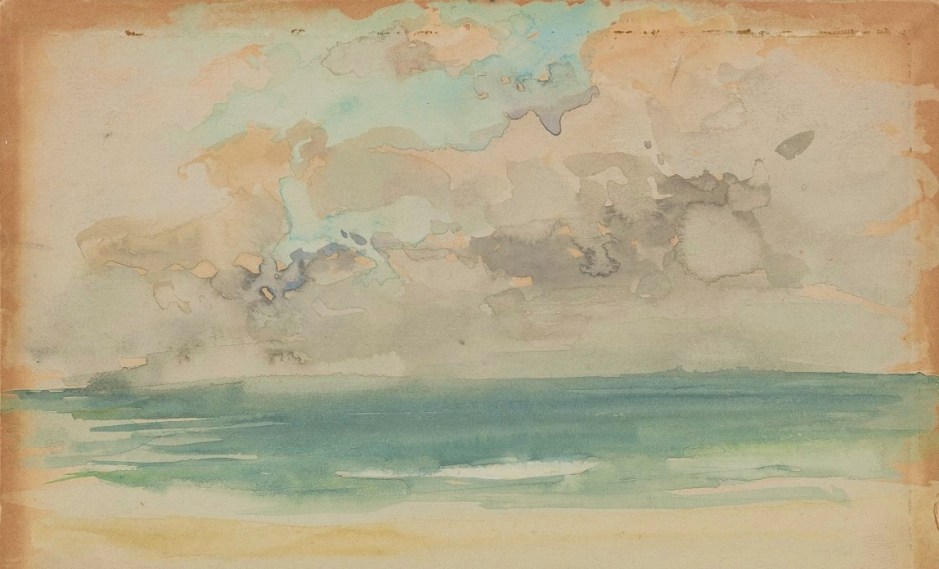
I am a selkie’s child. My mother has the look—all easy grace and dark-mirror eyes, a love for water and a lazy bask in summer sun with dark pelt dripping hair down her neck, otter-sleek. Her father’s father crossed an ocean but a clenched-jaw man stole her swim-skin and anchored her with daughters, a son, a house nine miles from the beach. This is not a new story: a myth makes peace with prison and guard that strip her of all but the weekend view of her heart-home sea.
A dark-eyed daughter watches. A dark daughter swims in the wind and the waves blown back, and makes wishes in the night on those waves, deep black. A dark-haired daughter waits.
I am a selkie-siren, born to a father whipped to sea-froth rage by my voice wrapping itself around questions like bacon around goat-cheese-stuffed dates. Knowledge is delicious, and I am always harvest-hungry. My first kiss was fingertip to paper, changing my world with the turn of a pulped page while my father played his only instrument: the croak of aluminum pop-top cans. The chime is always the same: crack, hiss, slosh. I hate the sound. I sing under my breath and my tongue sharpens, song of heat and carbon steel. He makes his own song on the other side of my bedroom wall at 4:30 am, coughing in the shower to mask the sound. Crack, hiss, slosh.
The library is my spell-house. I give them my name, they give me rights to every book in the building that smells of paper, vanilla, and the must of old carpet. If you know how to ask, you can have anything you want. I want everything. My father’s wasp-sting words start to slide off me like rain off a wing, and I apprentice among the tomes for an anemic check. I would do it for free.
They give me a simple set of keys, cold metal in the needful heat of my trembling hand. If you know how to ask, you can have anything you want. I want peace. I become a ghost, and lurk in the library in off-hours. I walk the stacks in the eerie dark that descends after closing. The silence rushes in my ears, it sounds like wind through the cattails growing on the dunes. It sounds like my mother’s white gauze dress when she walks, wet-footed, at the frothed-lace skirt of the storming Atlantic.
I am a siren-sister. My sister’s voice clashed with mine when young, and when we tried to trade words they turned to a mess of birds and blades and broken oaths. We kept our brother between us, fair and fun and freckle-faced, the easy hum in the valley between C and C sharp, the ohm that neutralized our bean sídhe screams. It will take thirty years for us to learn a harmony that does not grate us into the shreds of the girls we were who inherited a man’s mustang rage and a mother’s banked hope, who were swords with only each other to hone ourselves on—striking sparks with flinted edges, falchion against flamberge. If you know how to ask, you can have anything you want. I do not want to be a blade.
I become an acolyte of queries. I ask for a folded map to anywhere but here. I get Kentucky, and Georgia. I get Tennessee, North Carolina. I get California, I get Texas. (Has a siren ever been so far from the sea? Has a bean sídhe ever had so much open space to swallow up her voice?) I get green hills and forest, desert dust, wildfires. The hot dog-breath on my neck of keening Santa Ana winds.
Sirens always outlast sailors. Like villains and cheap candles do, my father flared out and is forgotten. My mother is back in her skin, more seal-bark and flipper-flap than the woman we thought we knew, more the girl from the photos I stared at as a child as I wished for traces of her face in mine. My sister left our ocean and all the memories it sipped for the prickly Pacific. She has a home by the ocean with windows thrown wide, a view of white mountain peaks, and easy access to the tide. She runs in morning fog. I have seen her go—she dissolves like memory, like sea salt into tap water, or sugar in rain. She has mastered the art of disappearing, while I have only learned how to move, and answer questions.
Any questions, any place. I tried to trade the sea creeping up the sandy strand for Appalachian hills and horses. But a siren, or a bean sídhe, or whatever hauntful creature I am is both never at home inland, and never far from who she is. Even now, in Texan desert, the song that claws its way up and out of my throat reeks of kelp and roe, is a crash of wave on wet rock wrapped in the cries of every gull that ever found itself dying twelve miles inland.
My brother moved to Michigan among the lakes, has a daughter and son of his own. I visit to remember the rabid bite of winter, that gnaw of hungry hound on bone. His son is a smiling prince—I tickle and ring him like the Shandon Bells at St. Anne’s. My niece smiles with a crafty glint in her eye and takes my hand to lead me back to a pile of books from the library, her favorite place. It’s past her bedtime, we have already read three. She dips her head and looks up. One more? She would trade her brother for another story, maybe her mother, if I asked. I lift her to my lap and rest my chin on her head. She smells clean, like saltwater and sand-scoured white stones exposed by low tide.
I tell her, If you know how to ask, you can have anything you want.

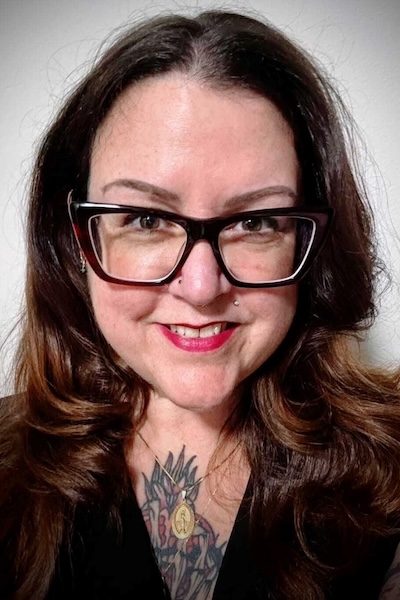
Colleen S. Harris earned her MFA from Spalding University. A three-time Pushcart Prize nominee, for her poetry and short fiction, her poetry collections include The Light Becomes Us, Babylon Songs (forthcoming), These Terrible Sacraments, The Kentucky Vein, God in My Throat: The Lilith Poems, and chapbooks Toothache in the Bone (forthcoming), That Reckless Sound, and Some Assembly Required. Her work appears or is forthcoming in Adanna, Berkeley Poetry Review, The Louisville Review, Cider Press Review, Appalachian Heritage, and more than 70 others.
 The Collidescope