

GS: You were born in Littlehampton in Sussex, England, but emigrated to Australia during your childhood. Do you still have memories of England from that time period? What do you think your life would have been like had you stayed in that country? Have you been back there at all?
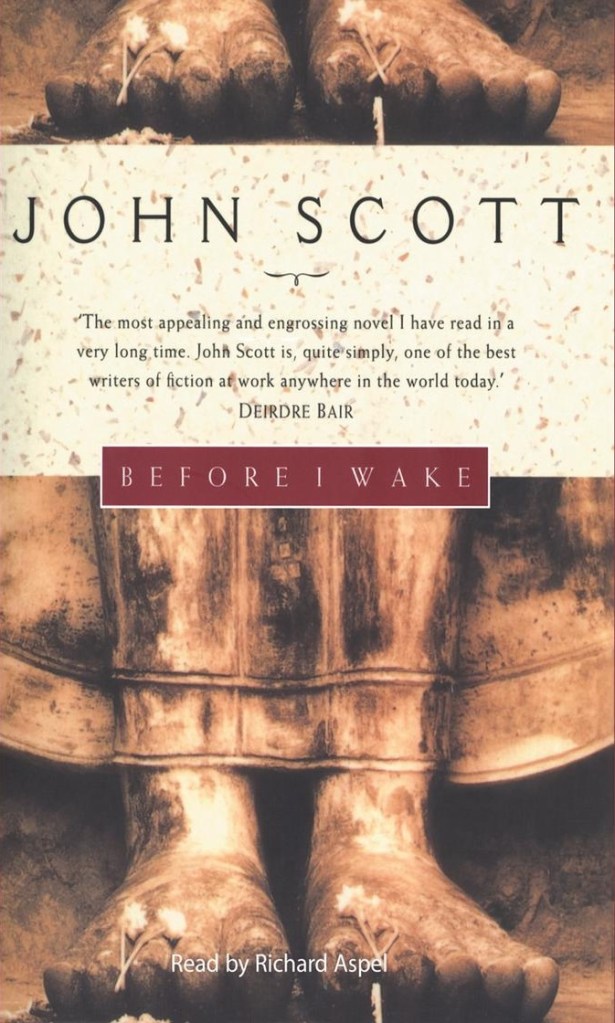
John A. Scott: I’ve visited England a couple of times, but they’ve been associated with location research for novels. England (and my childhood in Sussex) played a crucial role in the novel Before I Wake. The (tragic) life of my mother, Violet, has threaded its way through a number of works over the years. John Hawkes has noted that she has a pivotal role—imagistically, symbolically—in much of my writing. Emotionally, Paris (and France generally) is a key site in my novels, in particular in What I Have Written and Before I Wake; Berlin and Kyoto are central to The Architect. These cities often play against Melbourne.
GS: From its culture to its nature, what are the ways in which Australia has affected you as an artist and a person as a whole?
JAS: Australian ‘landscapes’ appeal to me more when they are transformed by the irrational—typified by the ‘settings’ for the narratives in N. The natural landscapes are a launching pad for the alien settings of events, cf. the early transformations in the early poetry of The Barbarous Sideshow (via Rimbaud) and From the Flooded City. That being said, location research (including extensive photoshoots) has been the building block for the generation in all of my fiction, be it imagined or transformed. Before I Wake of course includes the crucial landscapes of North-East Tasmania.
On a different tack, the Literature Board of the Australia Council was crucial to my development as a writer and very receptive to my (varied) projects. I cannot imagine this sort of support from the British Council. I will always be indebted to them. The demise of support for Australian literature (as opposed to ‘writing’) has been a huge blow to Australian culture.
GS: You’ve incorporated magical realism into some of your work, such as your novel Warra Warra. Gabriel García Márquez didn’t take to the term “magical realism” because to him and his people, the magic was as real as anything else in their world. To be more specific, he said, “Surrealism comes from the reality of Latin America.” Is this how you view the magic in your work? Does surrealism come from the reality of Australia?
JAS: For me, surrealism came from its French origins—there seemed more scope for ideas in the imagined than the real. I am more engaged by dream narratives than by realism.
GS: I recently acquired Poor Fellow My Country by Xavier Herbert, which is said to be the longest novel published in a single volume, as well as “The Great Australian Novel.” I’m curious if you’ve read this book and what you might think of it. What are some other Australian works I should know about?
JAS: I haven’t read the Herbert. I’ve tended to steer clear of long novels—my concentration has never been great. One of my favourite Australian novels is Rodney Hall’s The Day We Had Hitler Home (Picador). And there is Patrick White’s The Aunt’s Story.
GS: You mentioned how turning to novels made more words available to you because poetry involves holding back and cutting out. Conversely, do you think the act of writing novels has changed the way you write or view your poetry?
JAS: Simply put, it led me to develop narratives which might be incorporated into poetry and extend its applications.
GS: Similarly, do you still believe that poetry is “far too intense for prose fiction”? If so, why? Paul West is one example of a writer who has argued in defense of purple prose, saying, “It is the world written up, intensified and made pleasurably palpable, not only to suggest the impetuous abundance of Creation, but also to add to it by showing—showing off—the expansive power of the mind itself, its unique knack for making itself at home among trees, dawns, viruses, and then turning them into something else: a word, a daub, a sonata. The impulse here is to make everything larger than life, almost to overrespond, maybe because, habituated to life written down, in both senses, we become inured and have to be awakened with something almost intolerably vivid.”
JAS: I’ve changed my mind about the possibilities of prose and poetry back and forth over the years. Now I agree wholeheartedly with PW’s remarks above. These days, I am happy to drift back and forth between “writings.” Including the interchange between different ‘texts’ written and visual.
GS: Can you talk about your interest in translation and how those experiences have informed your other writing ventures?
JAS: I became interested in translation via that old Penguin series Penguin Modern European Poets. My poetry collection Translation (Picador, 1990) grew out of different sorts of ‘translations’ of texts; based originally on my translations of Emmanuel Hocquard’s élégies, done in collaboration with Penny Hueston and Michael Heyward in the Scripsi days. Michael also provided some plain prose versions of Propertius for me to develop. Apollinaire’s “Zone” was a seminal text, becoming a starting point for many subsequent works. Translation also included ‘translations’ from the notebooks and asylum letters of John Clare, linking it to my first book, The Barbarous Sideshow (Makar Press, 1975); as well as the prose poem “Elegy” and the poem sequence “He Mailed the Letters Himself,” concerning the old Ezra Pound.
GS: What is a novel or collection of poetry you’ve read and think deserves more readers? Why?
JAS: I’m a great admirer of Daylesford author Ross Gillett, whose command of imagery and visual imagination is consistently remarkable. His latest two volumes of poetry are The Mirror Hurlers and Swimmer in the Dust (both from Puncher and Wattmann). I am a devotee of Lucie Brock-Broido’s poetry collection Stay, Illusion (Alfred A. Knopf) and much lament her early death. David Brooks’ collections of short fiction (which border on prose-poetry) are marvellous, in particular Black Sea (Allen & Unwin) and Napoleon’s Roads (UQP). French author Anne Serre’s recent novellas, The Governesses and The Beginners, both from New Directions, are engaging. I recently read Pierre Michon’s The Origin of the World (Yale Uni.), which embodied a distinct and unnerving voice.
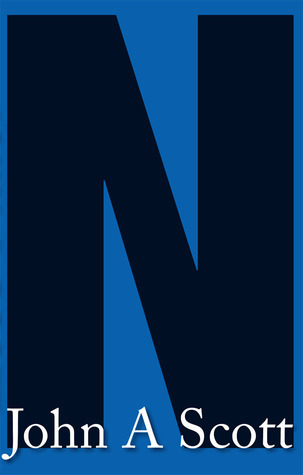
GS: At almost 600 pages, N (Brandl & Schlesinger, 2014) is your longest novel to date. It’s been compared to Pynchon’s Gravity’s Rainbow and even Herbert’s Capricornia. Can you reflect on your time writing this novel and lift the veil on some of the actual influences and guiding stars? Would you consider this novel your magnum opus?
JAS: I doubt I have the time/energy/concentration now to write anything of this length—so this has to do for magnum opuses/opera. The opportunity to mix time, place, mode, genre, styles, fact, fiction, and contemporary political commentary—especially in the Abbott era—was an exhausting but liberating experience. The necessary research on Australia during the era of Burke and Wills, etc., and on its artistic communities during the early 40s and at war opened up new avenues for narrative scenarios and for charting new and imagined locations. I bemoan the near-total lack of notice this work received. I think Netflix needs to make a series out of it.
GS: Your latest work is Shorter Lives (Puncher and Wattmann, 2020). What drew you to this biographical project and how do you see the expected trilogy evolving as each volume comes out?
JAS: I so much enjoyed writing the André Breton character in N (the conclusion of the Breton ‘life’ was published in Southerly 73/3 (2013) pp. 43-88.), and wanted to explore some of the possibilities in a collection of shorter pieces combining truth/fiction et al. My original inspiration was Maynard Keynes’ advice to Virginia Woolf: You should pretend to write about real people and make it all up. (25 May, 1921).
“Shorter Lives 2” is being slowly assembled and should feature pieces on: Pound (itself coming in close to 30,000 words); the continuation of Virginia Stephen up to and including her wedding night with Leonard Woolf—true & false); Renée Vivien (including new translations of selected poems); G.M. Hopkins; Basil Bunting; Ted Berrigan (and ‘career moves’); Djuna Barnes; H.D.; Nina Hamnett; Margaret Cravens; Frances Gregg; Romaine Brooks; Jane Bowles; Boccioni; Gertrude Stein; Hans Bellmer; Tony Hancock in Australia; Anselm Keefer….
GS: Out of everything written and unwritten, what story of yours would you like to be immortalized and why?
JAS: So hard to make such a choice. Each book (from, say, 1993 on) has tackled a different set of theoretical issues (stylistic, structural, thematic, generic, etc.) but has retained connections with its predecessors. N, however, draws in references from all of my works, post 1993—images, characters, events—so I have to choose N, whose full meaning draws upon the sum total of the oeuvre (thematically, narratively, imagistically, etc.). Peter D. Mathews’ book The Orphic Journey of John A. Scott (Cambria Press, New York, 2022) teases out a large number of these elements.
I hope to collect the strongest of the poems/prose poems in a New and Selected Poems which would highlight their particular interconnectedness.
Finally, apologies for my alarming lack of response. And praise for your perseverance.
With all my best wishes,
JS
For early access to literary content like this and other awesome benefits, such as editorial services, consider supporting The Collidescope on Patreon.

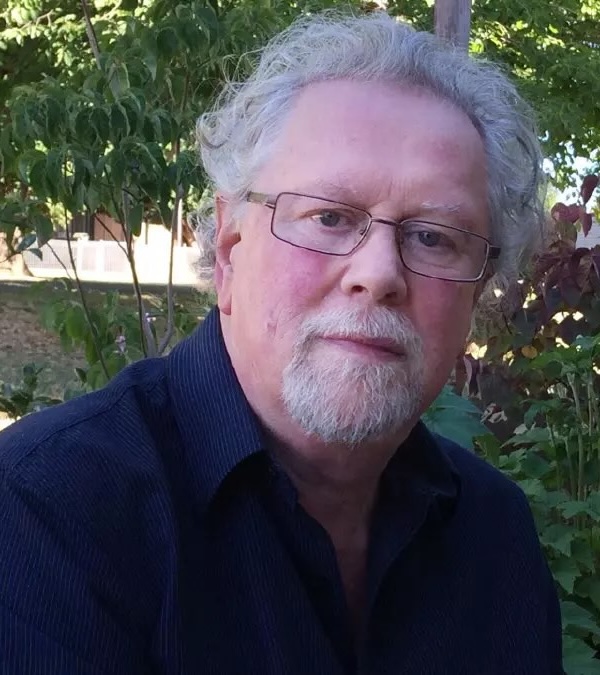
John A. Scott is an English-Australian writer who has penned over 15 books of poetry and prose. His works have been published in the USA and the UK and have been widely translated. He has received Victorian Premier’s prizes for both poetry (St Clair, 1986) and fiction (What I Have Written, 1994). The film version of What I Have Written (dir. John Hughes), for which he wrote the screenplay, was selected for Competition at the 1996 Berlin and Stockholm Film Festivals and was the winner of the International Mystery Film Festival in Bologna. His Selected Poems (1968-90) appeared in 1995. His novel Before I Wake was shortlisted for the Miles Franklin Award and the Victorian Premier’s Prize. His subsequent novel, The Architect, was shortlisted for the 2002 Biennial Adelaide Festival Awards for Literature, the Victorian Premier’s Prize for Fiction, and the Miles Franklin Award. Warra Warra, a ‘ghost story’ parable of the white invasion of Australia, was published in 2003. A major experimental novel, N, was published by Brandl & Schlesinger in April 2014.
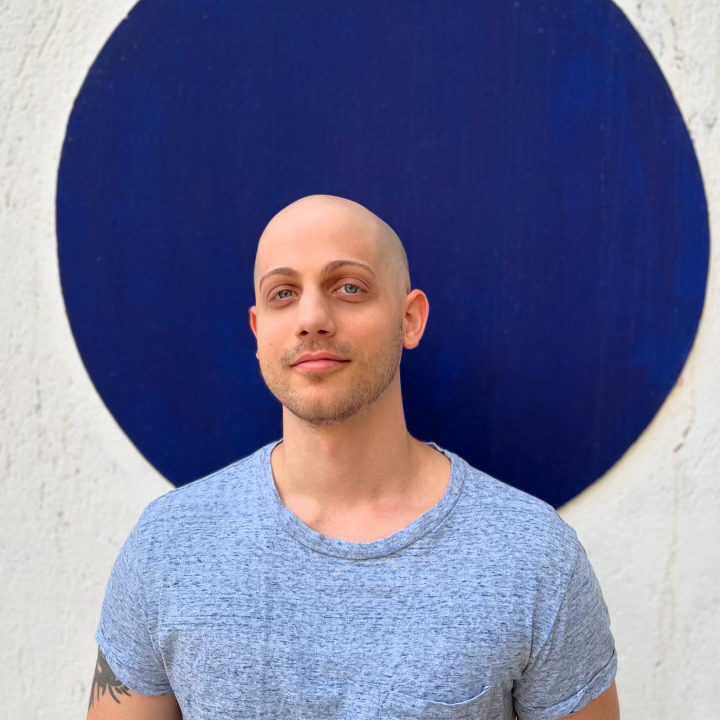
George Salis is the author of Sea Above, Sun Below. His fiction is featured in The Dark, Black Dandy, Zizzle Literary Magazine, House of Zolo, Three Crows Magazine, and elsewhere. His criticism has appeared in Isacoustic, Atticus Review, and The Tishman Review, and his science article on the mechanics of natural evil was featured in Skeptic. After a decade, he has recently finished working on a maximalist novel titled Morphological Echoes. He has taught in Bulgaria, China, and Poland. He’s the winner of the Tom La Farge Award for Innovative Writing. Find him on Facebook, Goodreads, Instagram, Twitter, and at www.GeorgeSalis.com.
The Collidescope is an affiliate of Bookshop.org and will earn a small commission if you click through those specific links and make a purchase.
 The Collidescope