
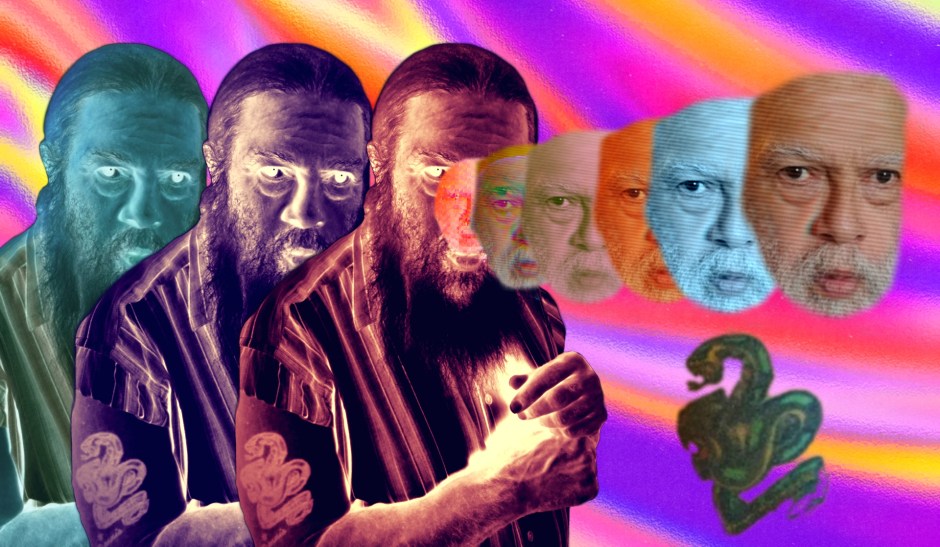
George Salis: How would you describe your awakening as a writer? How has your relationship with writing evolved over the years?
Samuel R. Delany: Given my druthers, I wouldn’t. As a writer, you live on the inside of a balloon, which you never see the outside of: your own creative process, while people who look at it from the outside constantly see suggestions of shapes and patterns that they’re quite sure you’re in command of and can somehow explain to them from your “privileged” position. The only way to come up with an intelligent answer is to talk about what it’s looked like to you, as a reader, in other writers.
I will say that the only two writers I ever wanted to write like were Theodore Sturgeon (26 Feb, 1918—8 May, 1985) and—arguably by way of Melville, whose Moby-Dick I first read at 17—a little later, when I had read more of him, “Dr. Style” (as William Gass has called him), Sir Thomas Browne, probably won out. I first read Sturgeon, hanging off a ladder, in the tiny middle school library, on the 6th floor at Dalton, while Mrs. Fisher worked at the desk below. And the book I read was More Than Human—and I was closer to twelve, at that time. When I got home, I started buying everything I could find by Sturgeon….
I didn’t want to tell the same stories—rather, I wanted “to learn how to do that too,” with my own writing, my own sentences. Indeed, the first story I wanted to imitate was Rilke’s The Notebooks of Malte Laurids Brigge, which seemed to me, when I read it, just to be about someone walking around a city and looking at things and people. Now that seemed easy enough, so I started to write one; it’s called Lost Stars, and it’s probably still in my archive. I started it at Dalton and wrote a good deal of it in my first year at Bronx Science, in the Annex, where all the first-year students were housed.
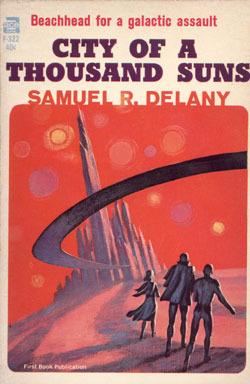
The first published book where I figured I had learned how to do it enough so that it might stand out, was City of a Thousand Suns. Oddly enough, as it was an SF novel, I did use what I thought was a plotting device from a Sturgeon story, “To Marry Medusa“—but fortunately, no one seems ever to have noticed, which makes me just as happy.
As to Dr. Brown? Well, no, I haven’t ever finished all the parts of Pseudodoxia Epidemica (Vulgar Errors, to you and me), but I read most of the other tracts, discourses, and letters. And my favorite? The letters he exchanged with his son, “Honest Tom,” as he addressed the boy—who was a sailor and used to write back almost equally vivid letters. Sadly, he died before his twenty-third year, describing the ship and what he saw in the ports they stopped in, but that correspondence seems to be the most human of his writings, on both sides, father and son. The sonorous discourses on gardens and urns dug from mud and ashes are, yes, extraordinary. These letters are the ones I’ve reread most often.
To read the full interview, consider supporting the efforts of The Collidescope on Patreon.

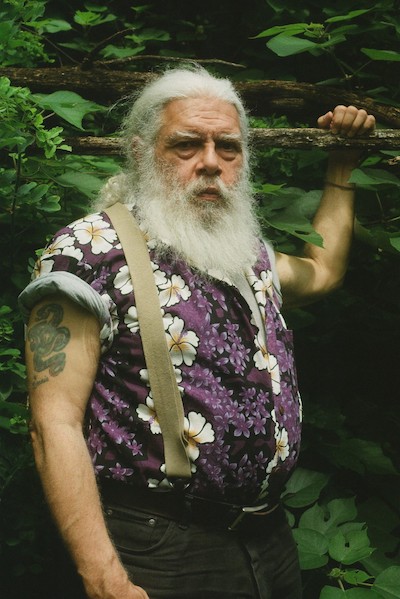
Samuel R. Delany is an award-winning American science fiction author. He was born to a prominent Black family on April 1, 1942, and raised in Harlem. Delany was a published author by the age of 20. He published nine well-regarded science fiction novels between 1962 and 1968, as well as several prize-winning short stories. Later in his career, he published several autobiographical/semi-autobiographical accounts of his life as a Black, gay, and highly dyslexic writer, including his Hugo-award-winning autobiography, The Motion of Light in Water. Since 1988, he has been a professor at several universities, including 11 years as a professor of comparative literature at the University of Massachusetts at Amherst and a year and a half as an English professor at the University at Buffalo. In 2007, Delany was the subject of a documentary film, The Polymath, or, The Life and Opinions of Samuel R. Delany, Gentleman. His website is here.
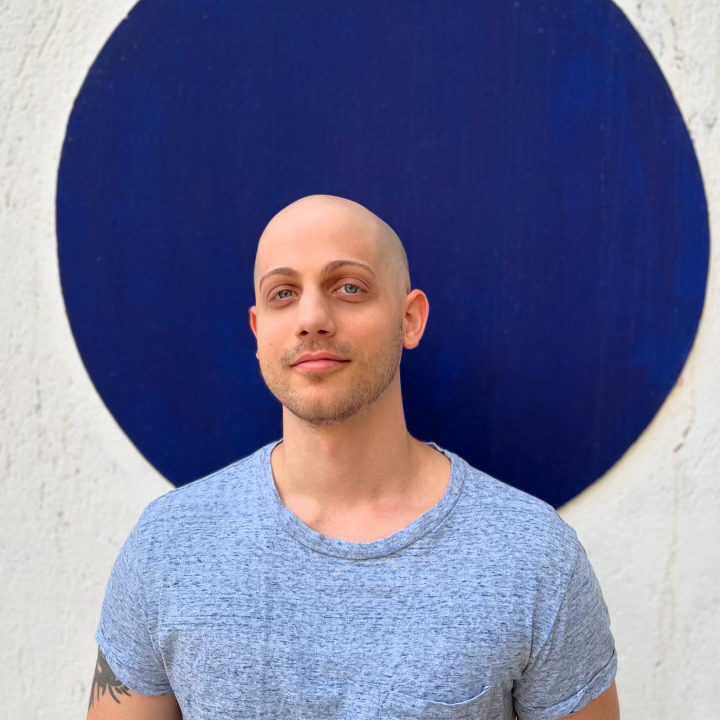
George Salis is the author of Sea Above, Sun Below. His fiction is featured in The Dark, Black Dandy, Zizzle Literary Magazine, House of Zolo, Three Crows Magazine, and elsewhere. His criticism has appeared in Isacoustic, Atticus Review, and The Tishman Review, and his science article on the mechanics of natural evil was featured in Skeptic. After a decade, he has recently finished working on a maximalist novel titled Morphological Echoes. He has taught in Bulgaria, China, and Poland. He’s the winner of the Tom La Farge Award for Innovative Writing. Find him on Facebook, Goodreads, Instagram, Twitter, and at www.GeorgeSalis.com.
The Collidescope is an affiliate of Bookshop.org and will earn a small commission if you click through those specific links and make a purchase.
 The Collidescope
I also hung off a ladder reading in the Dalton School library, in my first year there, 7th grade, but for me it Lord of the Rings!
LikeLike