
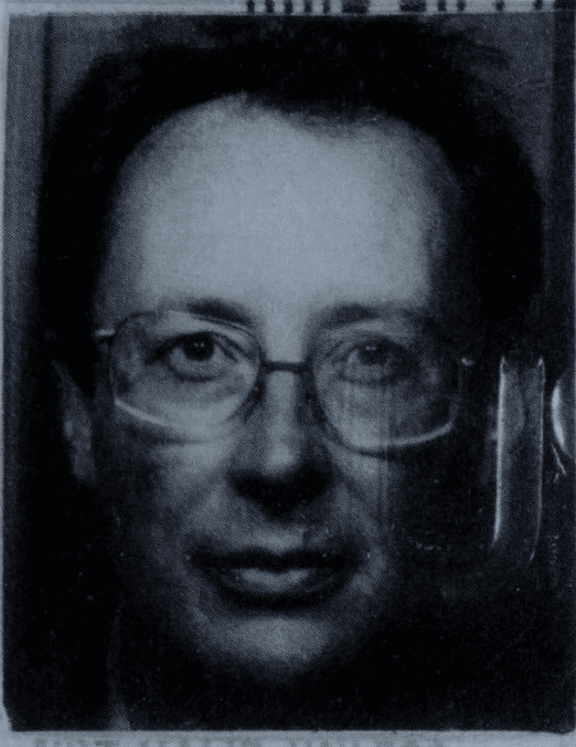
About Michael Westlake: Westlake’s seven published novels include Imaginary Women (Carcanet Press, Manchester, 1987), 51 Sōkō to the Islands on the Other Side of the World (Polygon Press, Edinburgh, 1990), The Triumph of Love and Other Paintings (St Martin’s Press, New York, 1997), World Enough (Lulu Publishing, 2009), and One Zero and the Ontological Question (Lulu Publishing, 2019). Born in southern England during World War II, he has lived and worked in various countries, including the United States (during the 1960s) and France (from 1990 until 2012, when he moved to the Scottish Highlands, his current place of residence).
Apart from writing fiction, Michael has worked as a taxi driver (drawn on for his two One Zero novels), journalist, advertising copywriter, maths tutor, and, currently, translator (from French to English). He has also had spells in academia, in particular at Manchester University, where he taught film studies (and co-authored Film Theory: An Introduction). His writings reflect these peregrinations.
The density of mochi is exactly that of human blood.
[…]
Mochi is more elastic than a stripper’s knickers.
[…]
In Japan, mochi is considered to resemble God.
In the title of my 2023 interview with Michael Westlake, I called him the “lost Oulipian.” Not because he misplaced his membership card to that French group (he isn’t a member, although they should make him an honorary one), but because his work often exhibits the kind of inspired constraints indicative of those writers, with phenomenal results. And yet, he’s far from recognized as a powerhouse novelist of the British ilk. Most of his work remains out of print and his latest offerings, 2009’s World Enough and 2019’s One Zero and the Ontological Question (a sequel to his 1980 debut One Zero and the Night Controller), were self-published via Lulu. Of his five traditionally published novels, only two from the late 80s remain in print through POD, thanks to the briefly active “micro not-for-profit” Verbivoracious Press: Imaginary Women and The Utopian. 51 Sōkō, subtitled To the Islands on the Other Side of the World, is his third novel, and was published in 1990 as part of Polygon’s “sigma” book series, which was dedicated to challenging “the barriers between disciplines.” Westlake certainly challenges these barriers and many others, including those of time, distance, language, culture, and so on. (Copies of the book are extremely rare and, when extant online, exorbitantly priced. I was fortunate enough to receive one from the author himself.)
On the surface, 51 Sōkō is an epistolary novel (sōkō coming from the Japanese for letters). More accurately, it’s an Anglo-Japanese epistolary novel that at times takes the microform of a game of Go, a history of Japan by way of postage stamps, computer code directed to Hackers Anonymous, a partial recap of Chinese-Japanese relations structured as boxing rounds, a canine-centric haiku competition, and much else. Thus, it should come as no surprise that the novel is eccentrically eclectic, airily erudite, humorous, heartfelt, wordplayful, juxtapositional, and often dreams itself into a reverie that almost feels as surreal and ethereal as Calvino’s Marco Polo’s reports to Kublai Khan. Rather than using cities and architecture as the sole foundation for its storytelling, although Tokyo and London, The Golden Pavilion and Buckingham Palace, are as much characters as anything else in the book, Westlake’s frameworks and muses are many, from islands to irises, from mochi to money, from pearls to poontang and beyond. To scratch the surface of this marvelous novel, I should mention that the first part features letters that use the following categories as focal points, springboards: food, money, bodies. The second, longer part the following: nature, war, buildings, writing, the unfigured. The center of the book acts as the skeleton key to the overarching structure, revealing the many parts and constraints at play, a handful of which even the most casual reader can pick up on from enjoying the text itself. That nucleus is labeled, “The Bridge,” and it’s one of particulated beams and bearings, columns and cables, connecting particulated worlds that have as much in common as uncommon. The section reads like a semi-insane index, with entries like the following:
luc/cul
dog called Lucky 02
calculus of lucre 04
cultured pearls 04
Cultural City at Nagasaki stamp 11
Lord Lucan 12
luck of those poisoned 12
lucanthropy 16
calculus of pleasure 50
world culture 50
As Westlake explains in our interview, “I had conceived of 51 Sōkō as a novel that would look at the United Kingdom through radically other eyes, namely four Japanese writers of letters […] addressed to a motley collection of individuals (real and fictional, living and dead, singular and plural) in these islands on the other side of the world.”
The quaternity of oriental epistolists includes Jo Wakizashi, a businessman who boasts a clairvoyant colleague; Mr. Okinomoto, a chef with a taste for the potentially deadly delicacy fugu (pufferfish); Mishima Oshima, who works in a factory assembling motorcycles; and, ever fantastically, Prince Genji of the eponymous tale from the early 11th century, a character who exists within the minds of his readers and is able to experience the world through their eyes.
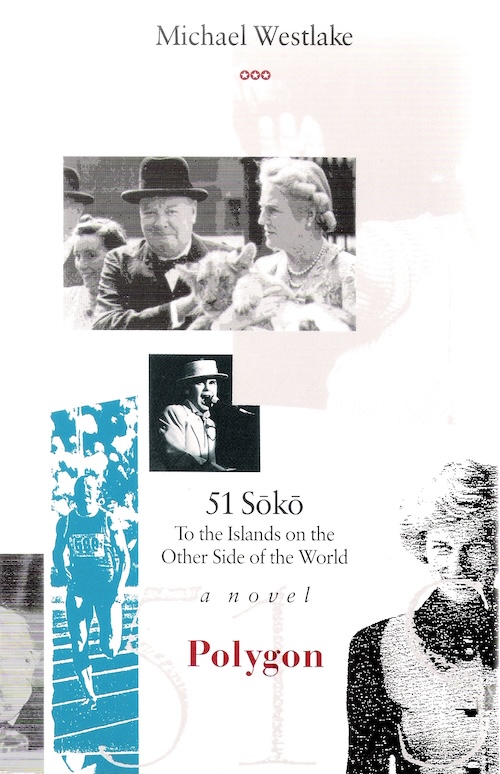
Among the many addressees are the artist duo Gilbert and George, with the recommendation that they become sumo wrestlers; Winston Smith and O’Brien from Orwell’s violent vision of authoritarianism absolute; Elton John, with the suggestion of representing Queen and country at the interment of Emperor Hirohito; the Welsh model and showgirl Mandy Rice-Davies, sort of a British Monica Lewinsky, with an explanation of how Rice-Davies embodies the geisha’s feminine spirit: “…it seems to me that the power of the geisha is as ephemeral as her garb and as much governed by the whims of men. […] Your destiny as a geisha has surely been fashioned by the Rice in your name.”
In this book, the 50 and one more letters give rise to a number as magical as the one thousand and one more nights of Arabia, the figure popping in and out of existence like a virtual particle: 51 syllable sounds in the Japanese language, 51 suicides on the London Underground in 1987, 51 attendants carrying Emperor Hirohito’s coffin, 51 concessions to the Irish by Charles I, 51 celestial beings surrounding the Buddha, and of course “the ignition point of paper, Fahrenheit four 51,” etc.
Westlake expressed to me in an email that his “feeling is that it’s a very British novel in the sense that many of the references would be unfamiliar to non-Brits, or even to younger UK readers, given that none of the recipients of the sōkō post-date the 1980s. Prince Genji’s ‘Sōkō 16’ in this regard, centred on Jenny Agutter in the film Walkabout directed by Nicholas Roeg, is one I particularly like.” Despite Westlake’s reservations, this modern reader had no major issues of understanding, for the novel is written with such contextual skill, such acrobatic finesse, that you don’t need to be an expert on all things British or all things Japanese, even though a working knowledge of both could certainly send you deeper down the rabbit hole, the usagi hole, as it were. Conversely, if you know next to nothing about these islands, then the book can act as a wide-sweeping primer, for with every letter we learn a little more about Japan, about Britain, about the senders, about the recipients, and everything in between.
And just as Genji is further breathed into life each time he is read, so is the novel as form enlivened each time one reads 51 Sōkō (were it in print, that is), likewise with the letter as form, both dying arts in their own right. It’s worth reflecting on the art of the letter, its sometimes one-sided longing, its cathartic outpouring, its heightened observation within and without, and even its quotidian enumeration as inadvertent time capsule. How would Vladimir Nabokov’s love letters to Vera read if he had sent them as texts, complete with basic butterfly and heart emojis? What of James Joyce’s priapic epistles penned to Nora Barnacle? Would they be reduced to eggplant and smiling turd emojis? Dick pics on Snapchat? There’s no denying that the vast majority of people have regressed to ancestral grunts and pictograms, without the original yearning intention, without the promise of the oral storytelling or bodies of literature to come, only the looming ignorance incarnate that threatens to cataract the eyes, choke the throat, and hemlock the ears.
As Mishima Oshima puts it, albeit in another context, but with a valuable forcefulness: “We shall not be deterred, in the knowledge that to write is better than to do nothing, even if it may never be read. Today the writer in us has the ascendancy.”
Ascend we shall, ascend we must, even if our trajectory’s Icarian. And O how bright Westlake’s feathers burn, at Fahrenheit four 51 no less.
Editor’s note: The aim of Invisible Books is to shine a light on wrongly neglected and forgotten books and their authors. To help bring more attention to these works of art, please share this article on social media. For early access to literary content like this, consider supporting The Collidescope on Patreon.
The Collidescope is an affiliate of Bookshop.org and will earn a small commission if you click through those specific links and make a purchase.

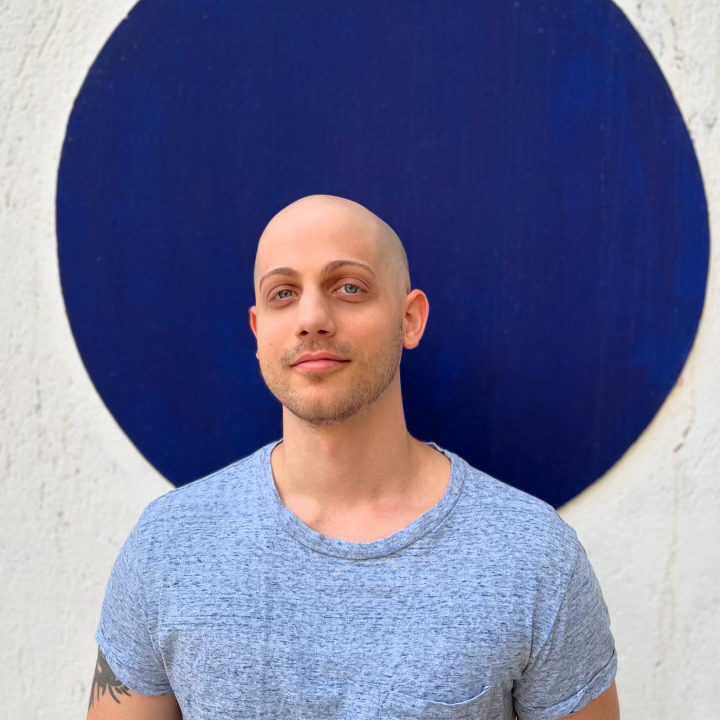
George Salis is the author of Sea Above, Sun Below and Morphological Echoes. His fiction is featured in The Dark, Black Dandy, Zizzle Literary Magazine, House of Zolo, Three Crows Magazine, and elsewhere. His criticism has appeared in Isacoustic, Atticus Review, and The Tishman Review, and his science article on the mechanics of natural evil was featured in Skeptic. He has taught in Bulgaria, China, and Poland. He’s the winner of the Tom La Farge Award for Innovative Writing. Find him on Facebook, Goodreads, Instagram, Twitter, and at www.GeorgeSalis.com.

