
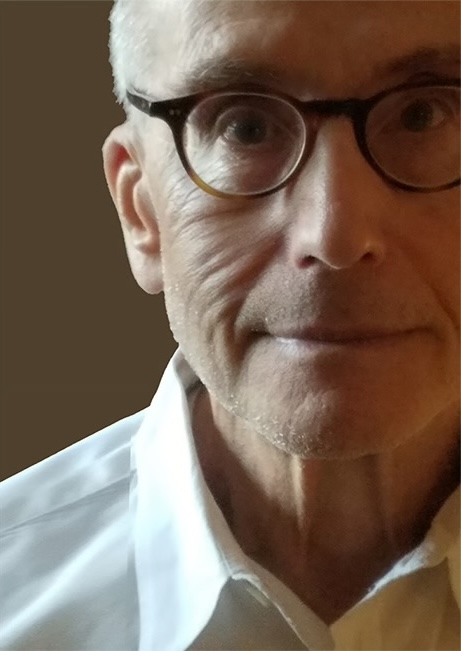
About Michael Brodsky: Brodsky, born in New York City on August 2, 1948, is a novelist, playwright, and short-story writer. He is best known for his novels, including Detour (1977) (for which he received the Ernest Hemingway Foundation Citation from PEN); Xman (1987); and *** (1994), as well as for his translation of Samuel Beckett’s Eleuthéria.
He graduated from the Bronx High School of Science and received a B.A. degree from Columbia College, Columbia University, in 1969. He attended Case Western Reserve University School of Medicine in Cleveland for two years before leaving to devote himself to literature. Apart from some teaching, he has worked most of his life as a technical editor. He lives in Manhattan, on Roosevelt Island. His latest novel is Invidicum.
I interviewed Michael Brodsky here.
During a mid-2020 interview, I asked the writer Alexander Theroux about an impending, if not already present, apocalypse of wordlessness, and he replied, “The barbarians are at the gates, no question,” and also emphasized that “literary fiction has very little purchase in the market today, from all that I can see. I blame TV, movies, video games, lack of reading, computer trolling, a paucity of good teachers, libraries rarely open.”
What one couldn’t predict was that over the next few years this apocalypse of wordlessness would take on a wordiness like no other, a deluge of dead-worm words, insentient sentences, paraplegic paragraphs, and even entire lobotomized books, all fueled by superficial “intelligence.”
In his four-volume Sheer Fiction series, Paul West refers to Michael Brodsky as the heir to Samuel Beckett. While I wouldn’t oppose this statement, there’s a major difference in these writers’ economies. The latter used fewer and fewer words until he all but mumly praised silence as a form of Nirvana, whereas the former has gotten more voluble over the decades, culminating in his latest novel, the veritable brick known as Invidicum. If we respond to the deluge with silence, we’ll drown. No, the answer lies in passionate virtuosity sustained by real, flesh-and-blood writers.
The critic Tom LeClair, reviewing a book of comparable girth, Mark Z. Danielewski’s Tom’s Crossing, published only a couple of years after Invidicum, wrote: “Although 1,232 pages may discourage many human readers, perhaps those retrograde pages are a heroic defense of reading itself, the history of human reading before AI. If so, Tom’s Crossing might be an original simulacrum of a 19th-century novel and an instructive work of contemporary fiction (though the pedagogy to make such a point seems extreme).” What does this mean for the 1,188 pages of far smaller font, far fewer paragraph breaks, far less dialogue, and none of the “clip-clop plot” that got Tom through MZD’s latest?[1] Whereas it took MZD seven years to write Tom’s Crossing, Brodsky wrestled with his monsterpiece for around two decades, well before AI algorithms, trained via acts of mass plagiarism, began polluting both the digital sphere and the earth. Length, as it is wrought by sheer creative force in the face of faceless, soulless machinery, is one thing, but what remains more relevant than ever is what Brodsky explains early on in his magnum opus, “Art in collusion with suffering—art as an unspeakable affront to unspeakable suffering—that’s the way it’s always been and always will be.” And that’s nothing software can do—it can no more suffer than it can think[2]—and the same is true for the lazy and talentless humans who use prompts to finger ChatGPT’s gag reflex until it vomits forth something they have the invertebrate audacity to call their own.[3]
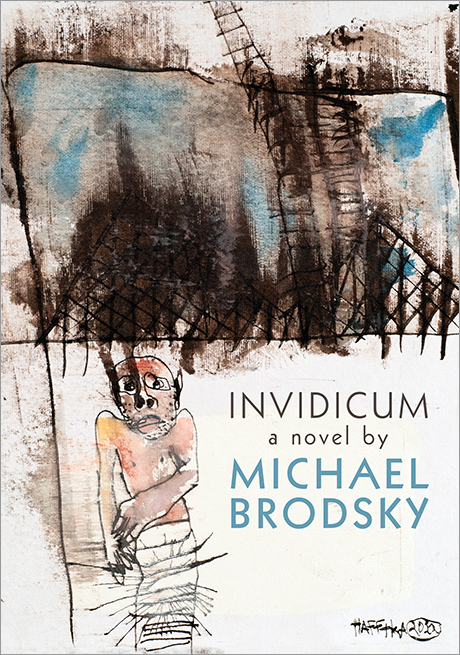
From the first word to the last, Invidicum is all Brodsky’s. Rather than a statue from the marble, or even one of Michelangelo’s prisoners, Brodsky has soldered yet more marble atop and around the block to create a towering golem, a “super-sculpture.” The plot involves the clinical trials of an eponymous experimental drug designed to cure envy (like Don DeLillo’s cure for the fear of death in White Noise, both pharmaceuticals are, in a sense, laced with fascism): “Envy, as everybody knows, is a killer syndrome—currently assuming pandemic proportions—its victims worthy of moat-encircled quarantine.” The characters are the participants in the trials, as well as those higher cogs in the pharmacological bureaucracy. In the former group, you have Martin Eden (after Jack Landon), who yearns to avenge his father by murdering head honcho Doctor Straynge (a name that evokes both the Marvel magician and Stanley Kubrick’s former Nazi, who, as it happens, is mentioned quite late into the novel when a character has “more trouble keeping his cosmic cycles under wraps than […] Peter Sellers had taming his Führer-lovin’ arm down in the Kubrick’s War Room!”); Melanctha Herbert (after Gertrude Stein), a Black woman who lost her son in the Iraq War and aspires to become a writer; John Gabriel Borkman (after Henrik Ibsen), a lousy entrepreneur in addition to being a failed husband and father whose eldest son, Jason, tried to strangle his mother and was deemed dangerous by a psychopharmacologist and a lawyer (we eventually see, some 1,000 pages later, that he has the makings of a Luigi Mangione or a more accurate Thomas Crooks); Moira Shearer (after the star of The Red Shoes), a respected but aging ballet dancer; Jean Rhys (after the British novelist), who has a disappointed and hypochondriac mother and suffers more from orphan disease than envy, yet she’s certainly envious of her younger sister Caro; and Charles Foster Cantor, a homosexual with HIV who longs for hetero-masculinity and mourns his lover, Charles Lane, code name Berry Sundae.
On the surface, these ingredients sound like the recipe for an Infinite Jest-esque epic (both books share a penchant for footnotes/endnotes, except Brodsky’s are more academic/citational[4] than DFW’s thought-within-thought ones). However, they exist as the foundation upon which Brodsky stacks and nests what he calls his “thought packets,” which, while not quite like Lance Olsen’s narraticules, are indeed molecular in nature. In our 2023 interview, Brodsky says that “pain was the price I had to pay in order to amass and amalgamate and go on amassing and amalgamating thought packets—thought packets as the framework—armature—body and soul—godhead—of my writing.” Therein lies the structure of Invidicum: sheer accumulation, sans an editor’s shears. A simultaneous implosion and explosion of abstract thought. The novel is unbending in its insistence on being itself. If anything, it bends under its insistence not to bend.
You see, Brodsky doesn’t stand for, and ostensibly can’t stand period, the tried and (un)true conventions of fiction: “the only thing better than lyricism is its dismantlement once and for all so that from lyricism’s impure and polluted flesh…meta-violets of critical understanding may spring,” “flashbacking is an acknowledgement of depletion,” “Action and movement […], which are the Abbott and Costello of storytelling at its bumpkin best…necessarily gnaw away at the very pith (read myth) of a storyteller’s uniqueness,” “The novel can no longer be about a ‘character’ thinking–being thought for by the author–but about the author’s need/will to impose his consciousness on an unwitting victim,”[5] and:
Even at its most robust-flamboyant, its most penny-ante baroque (“that means fancy”), everybody’s prose is maddeningly thin, ductile, slendered out. Language is by its very digital nature purificatory—vengefully so. A vengeful shaving of the fat of irrelevance off the bare bones of…being.
And while Invidicum certainly falls into the category of metafiction, rather than being coy and clever about it, it’s the exact opposite. The metafictional aspects take the form of self-consciousness and reflexivity born of honesty and a kind of fed-upness regarding the many artifices of fiction (why do all realizations need to be “sudden,” he asks at one point). Plus, the Master, the Some Body, is partly depicted as a deity, which reminds me of that moment when god, when the narrator, when the writer, peers through the inky curtain of Salman Rushdie’s The Satanic Verses, except in Invidicum this theophany, this disrobing of a higher emperor, if not plain robbing, is happening all the time, and seems to be, to some degree, one of the side effects of the drug administered to the characters, along with a “receptivity to deep-think” and “ungovernable eloquence in truth-telling.” The metafictional indulgences are also a constant source of tension between the narrator and the characters, so much so that the novel is more a protracted act of self-conscious anxiety than it is a direct exploration of the green-eyed monster. The characters soon begin to lose their identities altogether, even as they, by turns, resist and taunt and schmooze with the self-proclaimed Master.
As varied as the characters are, why do they speak increasingly interchangeably? It’s a question brought up incessantly. The answer seems to owe itself to the titular medicine: “…they not only responded to what was clearly a megadose but responded all too well. That is to say, they ended up completely cured not just of their Envy, but of themselves—of everything within and without they’d come to treasure as uniquely and inviolably them.” This mental cleansing, this personality evacuation, bolsters that ever-dystopian ideal, the utopia, as outlined on page 141:
…she can’t help feeling—no, she does feel that those assembled here represent the wave of a not-so-distant future—a future where the notion of being in or out of character as related to speech acts will be meaningless—a future where, for example, use of the phrase “infinitely malleable to circumstance” by somebody who could never in a million years be expected to know what it means or why its rigor is…sensuous to the touch or why surrender to the sensuousness is in this or in any context a moral duty. A future where such things won’t raise an eyebrow—indeed, will be wildly applauded. […] A future where character as we know it will be for all practical purposes extinct—where plausibility of utterance will no longer be adjudicated on the basis of whether the speaker is sufficiently at home with polysyllables—or sufficiently not—to be right for the part. And if anybody is to be considered a reliable prophet it’s the etymologist inasmuch as she’s lived her entire life uncomplainingly on the margins of the future.
There’s no denying that personality is far more fluid than pseudoscientific tests like the Myers-Briggs make it out to be,[6] and in Invidicum it’s so fluid that it’s fluvial, becoming one with the word flow and revealing the fact of free will’s unreality.
The book’s ultimate eschewing of characterization, let alone the space-time continuum, lends itself more to Harold Brodkey’s insular The Runaway Soul or Lucy Ellmann’s inundatory Ducks, Newburyport than the multivalent Infinite Jest, the latter’s vetoed subtitle (“a failed entertainment”) itself a failure, for despite DFW’s best efforts, he couldn’t help being wildly entertaining, while Brodsky seems to want to entertain by way of his lack of entertainment (the narrator often jokes about turning Invidicum into an HBO miniseries and the like), his self-admitted inability to tell a story as such—Is Godsky both willing and unable? therefore, he is not omnipotent. Yet, forgetting about bestseller aspirations, whether ironic or not, the girth of Invidicum alone would prevent this paperback from ever gracing/grazing the airport bookstore rack. And while there’s no such thing, no such sin, as omnipotence, omnipresence is all too reekingly real, in which James Patterson and Danielle Steel and Stephen King bloat the shelves of bookstores and make no room for others (those who scoff at Invidicum’s length need only place the output of these bestselling authors back to back to see who’s most guilty of stripping the earth of its forests for little in return).
As for Brodkey’s Runaway Soul, an 835-pager that took almost 30 years to write, the author also repeatedly mentions the failure of conventional narrative forms and exercises to depict or relay reality, as with this bit of seeming sincerity: “What happened is hard to describe: nothing in life, especially voices and motives and actions, is as clear as it is in a narrative.” If this is true, I’m not convinced that Brodkey hit upon a solution in that, his first and last novel, and the same might be said for Brodsky, assuming a solution is being sought in the first place.
And don’t try to escape the notion proffered in the final sentence of the above block quote—“…if anybody is to be considered a reliable prophet it’s the etymologist…”—for even when people misuse or mispronounce words, the air that ripples with their utterance hardens into tree rings that can be read centuries onward. This history, these words, down to the I and am, are the ballast of our daily stuttering dependence as much as our inarticulate artworks. Even as Brodsky rescues the most forgotten or technical or scientific of words—“nosocomial,” “apotropaic, “mithridate, “musth,” “chrematistic, “immiscibility,” “alveoli,” “curarizing,” “desiderated,” “haecceity,” “propositus,” “energumen,” “funambulist,” “iatrogenically,” “ictal,” “verboten,” “parergonal,” and “amphixis,” for instance—he seems to lack a basic faith in words period, and the flow they contribute to, yet it’s his atheistic devotion surrounding these spelled-out spells that ultimately breed something akin to salvation, atonement: “Words are parasites and once they get a whiff of his anguish it becomes the engine of their own ever-expanding flow in directions he never dreamed he could want to go. For their expansion is his expansion. And once they’ve sucked the anguish dry, after dragging it through all sorts of byways and arteries and dead ends he finds himself saddled with thoughts he never dreamed he could father.”
As with words, phrases, and much else, Brodsky is highly suspicious of readers, if he doesn’t downright loathe them, because, while it’s funny and makes sense for him to reflexively comment on his use of even the slightest uncommon words and allusions—“So what he’s been vouchsafed—(Yes, vouchsafed, you heard me right the first time. If you can think of a better word, feel free to contact my proctologist in the morning.)”—this tic continues hundreds and hundreds of pages in, well after a reader should have proven his worth if not earned some respect, yet even here, at the novel’s final hour, we have this: “There’s only the illusion—primordially constitutive of Mary (yes, primordially! yes, constitutively! And if you don’t stop bawling I’ll shove a few dozen more polysyllables down your gullet until this time you choke)….” Still, I can understand, up to a point, the urge to be a hostile host, for these days I’m of the belief that novels exist in a state of utter purity until they’re fouled by the eyes of ignorant and entitled readers (not to mention dickless critics), the red-handed killers of Schrödinger’s cat.
Perhaps as part of this hostility, this inhospitability, the novel is as repetitive as it is reflexive, reflexive because it’s repetitive and repetitive because it’s reflexive. Similar to David Foster Wallace, who tried (and arguably succeeded) to bleed transcendence from the stone of bureaucracy and boredom in his unfinished final novel The Pale King, Brodsky views repetition as a potential source for something ineffable: “That there is repetition not only in the phenomena of nature but also (pace Prof. Heiberg) in those of the spirit ‘where meanings are’—and (oops! before I forget!) that repetition is of course transcendence (in the words of the mighty Gottfried, the present is big with the future).”
On a sentence-by-sentence basis, the prose is highly sarcastic and thus not without humor, though the humor is often informed by, if not born of, a much deeper sense of horror, a characteristic of his work in general. I brought up this “mixture of humor and simmering horror” to Brodsky in relation to his work-in-progress, a novel titled Plentitude; or, The Bull by the Horns, of which I published an excerpt on The Collidescope website in mid-2025. He wrote back,
What’s particularly gratifying—validating—for me is your reference to “horror.” I strive to be true to the horror (the rot at the heart of normality, let’s say) in everything I write and to not be led astray by the “felicities”—the siren song—of language. That you responded to this all-important element (“the horror! the horror!” as Conrad put it) means more to me than I can say.
Brodsky’s prose, especially as it’s wrought in Invidicum, is often structured like wobbly Matryoshka dolls or fissured fractals, employing a mixture of clichés (either untouched, overturned, or toppled altogether), doublespeak (if not triplespeak), and allusions to philosophy, science, ballet, film, politics, opera, and more. For all the cerebral labyrinths, Brodsky offers up, likely against the Master’s better judgment, some moments of acute poignancy too, as when Cantor reflects on his lost love: “He recalls how the clothes in Berry Sundae’s closet refused to go the way of his flesh.” What a textual stew, Mulligan or otherwise.
Once upon a time at my alma mater, a socks-and-sandals-wearing professor with furrily furious eyebrows used the word “sprezzatura” to describe my critical writing, a word that could almost be defined as careful carelessness, with no small amount of reticence and nonchalance, a rare and slant contronym, if you will, that I can now officially pass on to Brodsky to describe the nature of his behemoth’s prose. When I said as much to him in an email in late 2023, he replied, “I’m touched and flattered by your invocation of sprezzatura. Confession: though I studied Italian for two years in college and had a great, lovely, charming professoressa, I had to look the word up just now in my Mondadori’s.”
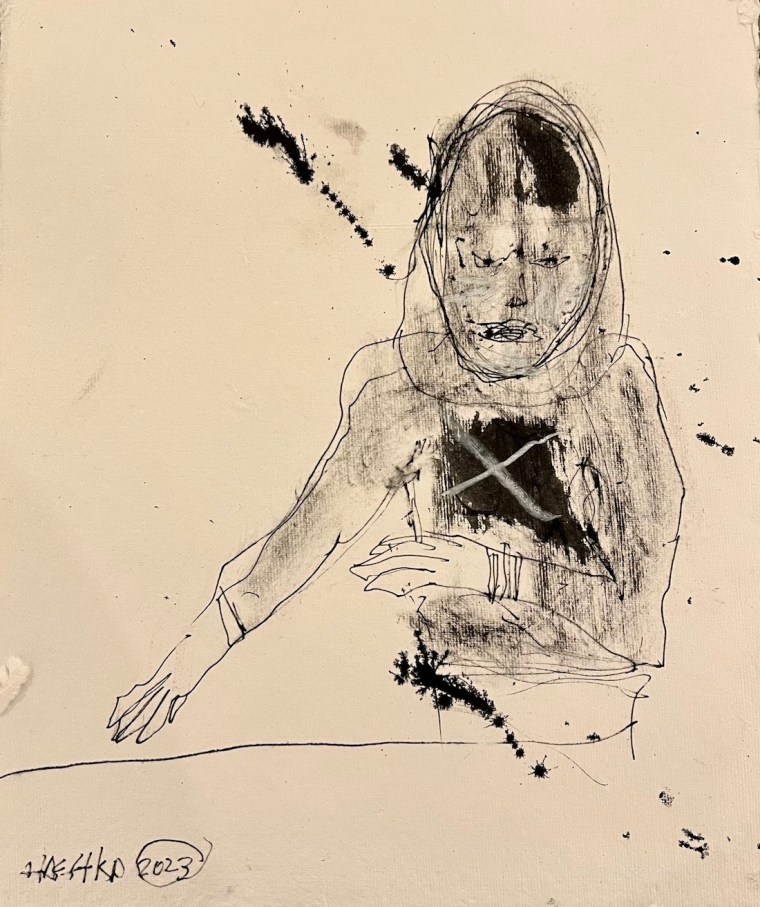
(Brodsky’s longtime collaborator Michael Hafftka provided both the cover art and the illuminations within—inky scratchy splotchy humanoid doodles from a nightmare notebook—and each, with their spritz of sprezzatura, fit the novel’s underlying sense of horror well.)
Speaking of contronyms, pharmakon is often invoked in Invidicum (over 80 times, in fact) and works as an overarching theme in more ways than one. The word, which comes from the Greek φάρμακον, means both cure and poison. It’s also related to the word φαρμακός, meaning scapegoat. Brodsky is the shepherd to this doomed herd as much as he is trotting among the bleating pill-pupiled.
The concept of the pharmakon informs the very essence of the novel’s composition. Early on, Brodsky explains, “The writing down’s both a remedy against not remembering and a solidified poison that gets in the way of the only remembering worth the effort—to wit, remembering that doesn’t know what it’s going to collide with on the way back—on the not always rocky enough road—to remembering. In short, writing’s a pharmakon, says a voice he doesn’t recognize.” By the time the novel is approaching its conclusion, he confesses, “…amnesia about who thought what and when cuts both ways: it plunges Him into unawareness of the richness of His hack work and exalts Him into unawareness of its indigestibility.”
As though existing within a temporal wormhole, the novel is set during the Bush era, the Obama era, and the Trump era, a palimpsestic consequence of its two-decade gestation. The latter era of unhinged patrimonialism is mentioned more and more—“It’s fatiguing to trot out these vignettes, stillborn even as they unfold in real time.”—until the ending morphs into a well-nigh screeching screed and satire this side of Robert Coover’s The Public Burning, but not before a pornographic detour in which “the tale of a drug’s administration [is] refracted through the unsterilizable medium of group sex….”
If the book’s banishing of traditional structure and narrative devices is an act of self-sabotage, on par with Rodin’s belief “that more beautiful than a beautiful thing is the ruin of a beautiful thing,”[7] then it would fall in line with a quote from Brodsky’s 2007 collection Limit Point, specifically the story “Midtown Pythagora”:
It came to me that the waste of talent, albeit in its tiny way tragic, is at the same time as a tragic thing vastly overrated. If anything, there’s already too much talent in the world and, more to the point, the wrong kind of talent. Perhaps as humankind progresses it will come to recognize without any bitterness that there is nothing as grandiose as being perpetrator of, collaborator in, the waste of one’s own beautiful but unneeded and unwanted talent. […] Infinite power derives from knowing one could have produced a masterpiece but that, pursuant to some unfathomable punctilio, one refrained and let the sands of genius slip through the sieve of stubby ink- or paint- or clay- or feces-stained fingers.
Maybe Brodsky has discovered via Invidicum a way to waste talent and squeeze it for all it’s worth, a way to “render all distinctions between success and failure irrelevant”—the final pharmakon. Either way, or both ways, if you’re tired of literature that bows down to preconceived notions and expectations, then read Michael Brodsky, a major writer in the war against wordlessness in all its algarrhythmic wordiness. Prepare yourself for a challenge because Brodsky focuses on the interstices between minutes, between seconds—his arrow comes from Zeno’s quiver—but also prepare for seeing and thinking of things differently. It took me over two years to read Invidicum, proof enough that the arrow can reach the bullseye of the last page.
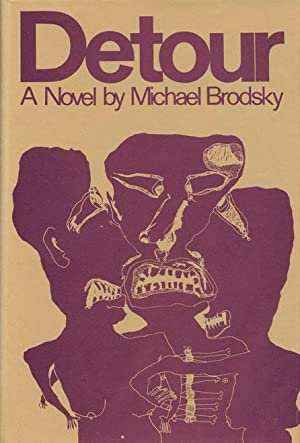
I should disclose that not only do I know Michael personally (we were first e-introduced by the writer Richard Kalich), but I also helped facilitate the publication of Invidicum via Tough Poets Press after he told me about the manuscript during my 2023 interview with him. I first met Michael in person in NYC in February of that year. We ate at a vegan Asian restaurant and then spent a good deal of time book-hunting at the Argosy. He was self-conscious to an almost David Foster Wallacean degree, yet never anything other than kind, sincere, and an intense listener. We bonded over many things, literature being the foundation of it all. While browsing the fiction in the basement of that century-old bookstore, Michael confided in me about Susan Sontag, whom I had mentioned earlier in our conversation.[8] He explained that at the publishing party for his first novel, Detour (1978), Sontag approached the table display for his book, considered it for a brief moment, then simply shrugged before walking away. He said he had been keeping that cold shrug warm inside himself for decades, only now relinquishing it to me. I see how this shrug was the prime move of an immovable mass of readers who have failed to understand Michael’s fiction, failed to even try, failed to even fail better, aside from the precious few, Paul West chief among them. The question is: faced with Invidicum’s more than 616,000 words and the other dozen books Michael has written over the years, comprising as they do an oeuvre unlike any other, “Will you shrug too?”
[1] As he explained to me in an email.
[2] Although these algorithms’ capacity to hallucinate remains high, making them about as reliable as unmedicated schizophrenics.
[3] One of these pitiful losers even deceived a veteran critic into believing he had spent over a decade “writing” a mega-novel.
[4] Example references include film theorist Noël Burch, Karl Marx, Thomas Hardy, art historian Meyer Schapiro, Jean Piaget, Gertrude Stein, Ronald Barthes, and Agatha Christie.
[5] This comes from Brodsky’s 2014 WordPress blog post “Giblets and Firstness.”
[6] Never mind the absolute idiocy of astrology.
[7] This is also from Brodsky’s blog, specifically a 2014 post titled “Letters to the world.”
[8] Lest I betray Michael’s confidence, I received permission from him to quote from our correspondence and share the Sontag anecdote, and his emailed response is not only indicative of his generosity but also his self-consciousness as a writer: “I am flattered, honored, revived by your response to the book. […] Please feel free to include whatever—absolutely whatever—you’d like to include in your oh so generous response to the book. I detest those self-proclaimed artists who are all too willing to be taken seriously but then complain when the terms of involvement do not meet with their macroegoistic nonsensical specifications. You’ve done me a great honor. I hope I’m worthy of the tribute and that I don’t turn out to be just another hack—a fraud—a fake.”
Editor’s note: The aim of Invisible Books is to shine a light on wrongly neglected and forgotten books and their authors. To help bring more attention to these works of art, please share this article on social media. For early access to literary content like this, consider supporting The Collidescope on Patreon.
The Collidescope is an affiliate of Bookshop.org and will earn a small commission if you click through those specific links and make a purchase.

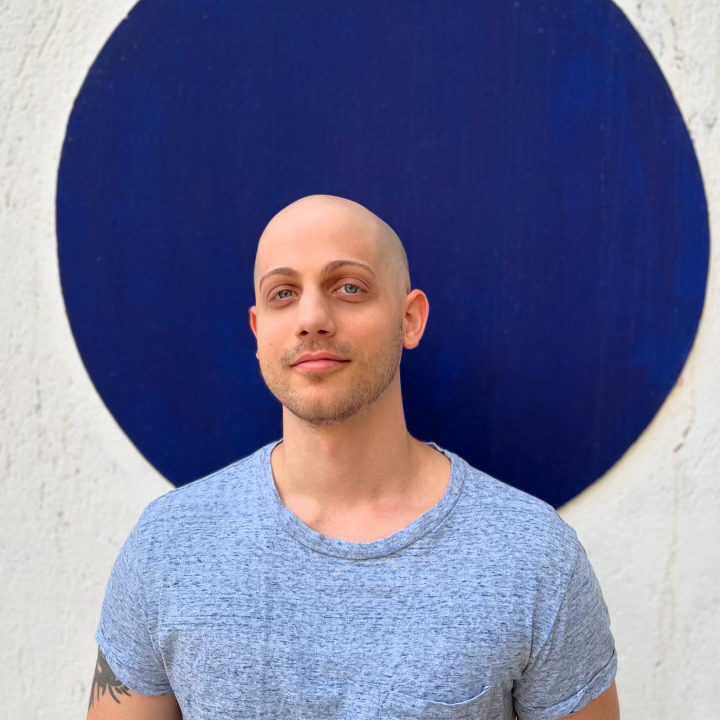
George Salis is the author of Sea Above, Sun Below and Morphological Echoes. His fiction is featured in The Dark, Black Dandy, Zizzle Literary Magazine, House of Zolo, Three Crows Magazine, and elsewhere. His criticism has appeared in Isacoustic, Atticus Review, and The Tishman Review, and his science article on the mechanics of natural evil was featured in Skeptic. He has taught in Bulgaria, China, and Poland. He’s the winner of the Tom La Farge Award for Innovative Writing. Find him on Facebook, Goodreads, Instagram, Twitter, and at www.GeorgeSalis.com.

