
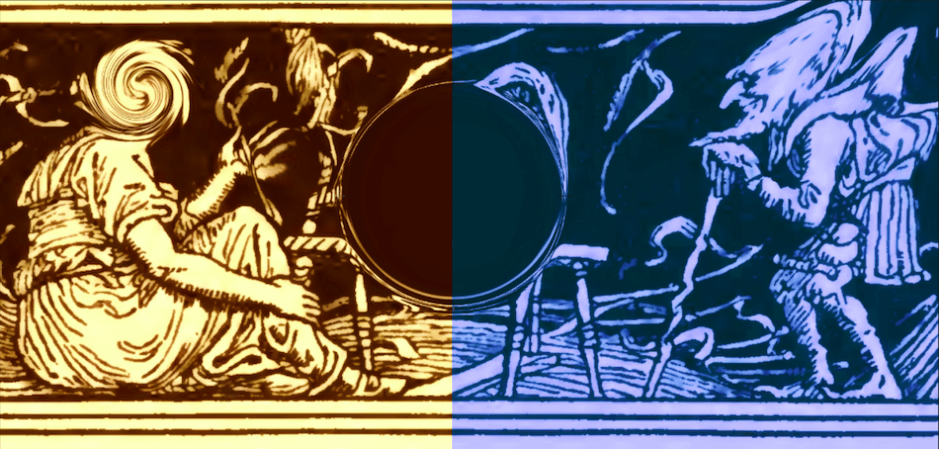
The latest retelling of Rumpelstiltskin by Mac Barnett makes me want to stamp my foot so hard I’d break in half. I usually avoid writing negative reviews. They can feel like an attack. But in my defense, Mac Barnett started it when, as the National Ambassador for Young People’s Literature, he went on record saying 94.7% of said literature is “crud.” Before that, I knew him for writing a beautiful picture book, Sam and Dave Dig a Hole, that was deep on every level. With this Rumpelstiltskin retelling, he doesn’t exactly dig the hole girls are in but he’s not pulling them out of one either. And granted, that’s not his job or his obligation. Stories can be anything the storyteller wants them to be. In this case, it could have been so much more.
If any fairy tale begs for a retelling, it is the problematic Rumpelstiltskin. The miller’s daughter in the story has always been in a tough spot. If she can’t spin straw into gold, the king will have her head. If she can, he’ll have her hand. The title character seems at first to be the hero, spinning the straw into gold to save her, but there’s always a price to be paid—in this case, her firstborn.

When I heard about Barnett’s heralded retelling, I hoped the master storyteller could finally rescue the poor miller’s daughter from her unending plight. I opened the book with anticipation. Colloquial language, good. A miller’s daughter who plays with frogs, nice. No girly stereotypes here. Ok, now we’re getting to the crux of the story. How will it veer from that awful catch-22 of murder or marriage? To be killed or kissed? I turn the page and…it doesn’t. And the miller’s daughter is…happy? No! She’s so happy!
The power of archetypes in fairy tales is that no matter how often we read them, they ring true. This rang hollow. It was not a retelling, but a faithful copy, transcribed in slang. Why the veneration? The reverence for long-dead storytellers such as the Brothers Grimm is a disservice to modern youth. And the brothers were certainly storytellers in every sense. Although they claimed to write down fairy and folk tales as they heard them, revisions in their private papers tell a different story. They even made changes between printed editions of their Original Folk and Fairy Tales (Kinder und Hausmaerchen). They hushed up a pregnancy between editions for goodness’s sake. I mean that literally; they were forcing their own ideas of goodness on the stories.
Here is a snippet from the “original” version of Rapunzel from the first edition of the Grimms’ collection translated by D. L. Ashliman, a retired professor from the University of Pittsburgh:
At first Rapunzel was frightened, but soon she came to like the young king so well that she arranged for him to come every day and be pulled up. Thus they lived in joy and pleasure for a long time.
The fairy did not discover what was happening until one day Rapunzel said to her, “Frau Gothel, tell me why it is that my clothes are all too tight. They no longer fit me.”
“You godless child,” said the fairy. “What am I hearing from you?” She immediately saw how she had been deceived and was terribly angry.
So much to unpack! The fairy/witch kidnaps a girl and holds her against her will in a tower for most of her life, and Rapunzel is the bad guy here—the godless child—for being with child!? And the Brothers Grimm? How do they come off? Maybe not as good guys or bad guys, but as guys who certainly manipulated stories as they saw fit, removing any reference to Rapunzel’s clothes not fitting in later printed editions. The brothers had the power to end a pregnancy and change the narrative to fit their morals. How did they get that power? By taking it. By us giving it to them even now.
Just because the tales were written down by the Brothers Grimm doesn’t mean they were set in stone. And it doesn’t mean they are holy or untouchable. They can change as we change and as information about them changes. (That first Grimm edition with a pregnant Rapunzel was only fully translated into English in 2014 by Jack Zipes.) Stories are living things. They can come alive in new ways. We’ve had plenty of schooling in this. Angela Carter’s retellings were recognizable but enriched with the element of feminine desire. The tales from T. Kingfisher and Kelly Link bear as much resemblance to their predecessors as a pterodactyl to a titmouse. Similar only at the skeletal level, and ultimately more terrifying. Is it a coincidence that it seems more women than men rewrite old tales? What isn’t a coincidence is that the Grimms collected stories mostly from women.
I want to believe a writer can inhabit any skin, as the hero does in the Grimms’ lesser-known “Hans mein Igel,” in which a hedgehog sheds his pelt to become human. But that idea is probably a fairy tale. The new retelling of Rumpelstiltskin makes me wonder if a man can see the same terror a woman finds in the original. The king threatens the miller’s daughter with execution and then with marriage. Which is worse? Putting a name to Rumpelstiltskin steals his power. Why can’t we name the horror that lurks in the middle of this fairy tale, hiding behind a smile? A bland and faithful retelling feels like the archetypical version of our modern-day non-disclosure agreement, a written document in which abusers keep women silent about abuse.
Not every tale needs to taste like a poison apple, but can we at least acknowledge there is poison there in Rumpelstiltskin? Unwanted attention. Forced marriage. Marital rape? Unwanted pregnancy forced to term? We can only imagine. Or maybe, women can only imagine. This male author doesn’t seem to think about it at all but paints a smiley face over it. In that gap between the threat of “off with your head” and the birth of a baby, something happens. Something malevolent. Abuse, loss of freedom, loss of agency, loss of self. Those are terrible. But even worse? Flip the page to read that the miller’s-daughter-turned-queen is now “so happy.”
The author saw nothing wrong with this. Did anyone else pause at that literally pregnant pause in the middle of the story? The agent, the editors, the publishers? The illustrator? It illustrates a divide. Who is telling stories and for whom? Sometimes a story is just a story, pure entertainment. Sometimes it means something. A radical retelling of this old narrative could mean the world to a girl who recognizes her neglectful father in the miller or a shitty boyfriend in the king, someone who betrayed and used her in Rumpelstiltskin. What does she learn instead from the original tale and the faithful retelling? Smile more!
Maybe I’m reading too much into this, but isn’t that what stories are for? In the retelling, the miller’s daughter names her child after her father and the king, who share the same name. This is telling, especially in a story in which names mean so much! Does this suggest intergenerational trauma? Nothing changes. Will the son be like the father and grandfather? The one nod to agency is that the miller’s daughter learns Rumpelstiltskin’s name on her own. It’s a little hopeful. Better would be she files for divorce and a restraining order.
A fairy tale should not be didactic, but it should not be punishing by omission. I’m not saying this retelling has to be different. I’d be a wicked witch or another word that rhymes with that word, turning a prince into a newt, or vice versa, the moral of the story into a story with a moral. It’s wrong to force fact into fiction. But what if it wants in? What if it can’t be ignored? What if ignoring it allows a monster to grow in the dark?
We don’t have to dance ourselves to death in putting ourselves into someone else’s red shoes as in the Hans Christian Andersen tale. And we don’t have to beat a topic to death either. But Rumpelstiltskin is a story about spinning straw into gold, about putting a spin on a talent. Putting a narrative out there. Whose narrative is it? Who is the hero of the story, who the villain? As in the omnipresent Epstein files, the missing parts are the most telling. Bluebeard has his terrible secrets, but they are at least open secrets. The most chilling secrets are the ones that stay in the dark. When I read Rumpelstiltskin, what I see is a young girl with a smile in the arms of a prince. It sounds like an old fairytale. Put in the names Virginia and Andrew and we recognize it as a horror story.
Like Rumpelstiltskin dancing around the fire, telling the world who he is, this tale is begging to be retold, spun in a new way. Fantastic or founded, but ringing true.

Renate Wildermuth’s articles, stories and essays have appeared in The San Francisco Chronicle, The Miami Herald, Adirondack Life Magazine, on public radio. Her YA Gone Before You Knew Me received a review in Booklist and is an Amazon bestseller. She has an M. A. in German with a concentration in Fairy Tales. Her website is here.
 The Collidescope