
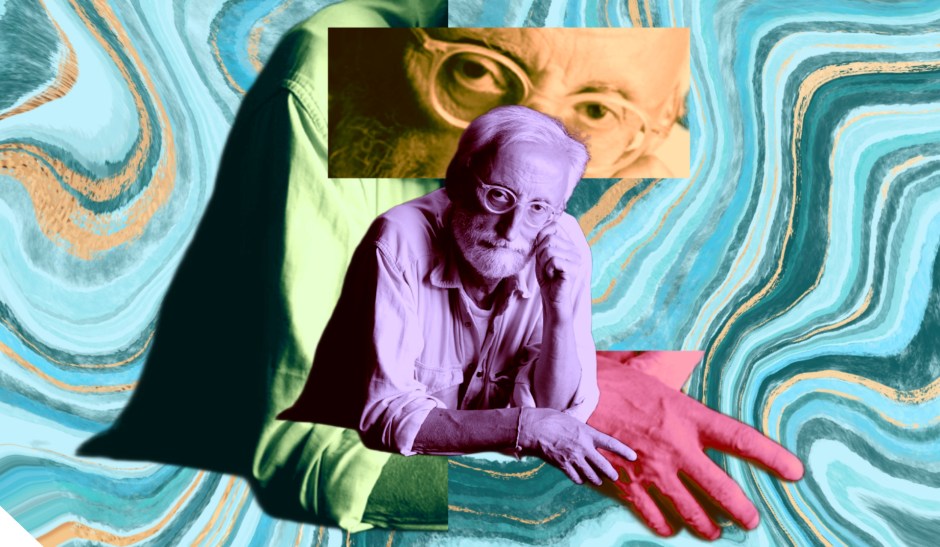
Editor’s note: I’d like to express my gratitude to Federico Ciriminna for translating this interview from the Italian and making this exchange possible.
George Salis: You were rejected by publishers and wrote in obscurity for around 15 years before publishing your first book at the age of 45. Did you enjoy a special freedom in this obscurity? Did finally finding a publisher feel like vindication? In general, can you tell me about this time when it was just you and the words, you and the writing?
Antonio Moresco: It was my misfortune, but also the gift I received as a writer, because that long underground period of total exclusion and rejection by the Italian cultural and publishing world allowed me to remain explosively close to myself, to encounter and recognize my own voice, to forge and test my vocation as a writer through struggle—struggle and adoration.
GS: Hopefulmonster published your book, I Due, in late 2025, in which “a writer and his translator clash and their miserable and admirable deeds are recounted.” Do you think the strained relationship that can exist between the writer and the translator is similar to that of the writer and the reader? After all, readers may not translate in a conventional sense, but they interpret the writer’s words and imagery, often in ways that might mutate or even mutilate the text.
AM: That is true. Like the translator, the reader also interprets the text and bends it to their own desires and needs. As I imagine happens to many other writers, I often read reviews or hear opinions about my books that astonish me because they are—or seem to me to be—so far removed from my intentions. But it is good that this should be the case. It is good for there to be such freedom and risk in the relationship between a text and its readers, for a writer’s work not to be subjected to a rigid, authorized canonical interpretation, as often happens with sacred texts, around which castes of people arise who derive their priestly power from presenting themselves as the only ones authorized to provide the correct interpretation of that text. Between orthodoxy and risk, I prefer risk.
GS: You’ve been described as the founder of modern Italian literature. Do you feel more of an affinity with other modern Italian writers or those who have come before, such as Italo Calvino or Anna Maria Ortese, for instance?
AM: I formed myself on the writers of the past, whom I began reading after the age of thirty and after ten years of going off the rails. During that period, in a studio apartment on the outskirts of Milan, I retraced the whole of literature from its beginnings, on my own, because my experience at school had been disastrous and I had not attended university. On this solitary journey, I was fascinated above all by the Greek tragedians, Herodotus, Xenophon, the Iliad, and then Cervantes, Swift, Balzac, Stendhal, Dostoevsky, Tolstoy, Melville, Kafka… Poets like Emily Dickinson and Rimbaud… But also ancient women writers such as Murasaki, painters’ letters, books and diaries by mystics… Among the Italians—apart from my beloved Dante and Leopardi—I was captivated by twentieth-century novels such as Zeno’s Conscience, With Closed Eyes, The Experience of Pain, The Conservatory of Santa Teresa, Horcynus Orca, and the works of Primo Levi… Because sometimes you have to look backward in order to see forward; sometimes grandfathers are more revolutionary than fathers.
GS: What is a novel you’ve read and think deserves more readers? Why?
AM: There are many. Several of those I mentioned earlier, for example. Because readers are often afraid of what brings disturbance, of a dramatic opening up of possibilities. They prefer not to be challenged, to be entertained without surprises while awaiting their own death. They prefer déjà vu and familiar paths rather than the unknown, supported in this by a publishing industry that often lacks daring and has made flying low its emblem. Literature, however, should bring adventure, exploration, and the breaking open of possibilities into the world—especially in this age, at this crucial moment in our lives, both personally and as a species.
GS: Your trilogy, Giochi dell’eternità (Games of Eternity), is a grand work, the work of a lifetime, amounting to more than three decades of the imagination on fire. Can you talk about this trilogy’s conception and execution? Did you give yourself the mammoth task from the very beginning? Or did it spiral out and accumulate in ways you never originally expected? Did you ever feel that the books were becoming uncontrollable?
AM: This vast work in three major parts was written over the course of 35 years, and its development was more akin to the progression of stem cells—equipotent cells—than to a conscious, predictable, and controlled project or program defined from the outset. Writing it was an adventure for me as well: a discovery, a risk, a journey into unknown territories without a safety net, an invention of the world without which I would not have been able to see the world and make it expressible through literature. It was uncontrollable not in the sense that it lacked its own vision, but in the sense that it surpassed me, that it had to invent its own rules—even in defiance of its author and the limits of his knowledge.
GS: Many contemporary writers seemed emboldened by restraint and dilution, while your books expand and grow until they’re organisms unto themselves. Do you see minimalism as a failure of artistic courage?
AM: Not necessarily. There are good books and mediocre books in both camps. And there are writers described as minimalists—Chekhov, for example—who, beneath their gentleness, are actually fearless and radical. We must distinguish one writer from another, beyond the groupings resembling mathematical sets into which critics place them. The infinitely small and the infinitely large sometimes mirror one another. There is an atomic point of contact where maximum and minimum meet and become one.
GS: From the fascist right in the United States to the neo-Nazi party Golden Dawn in my home of Greece, authoritarianism seems to be more fashionable worldwide than at any time in recent history. What is your view of the political situation in Italy and abroad, and do you think literature is a viable way to fight against such despotic tendencies?
AM: An ill wind is blowing. Ghosts and demons thought to have been extinguished after the horrors of the twentieth century have begun seething once again in the belly of Europe, the United States, and the world. It seems that the human world has fallen prey to repression and suicidal madness, to what Freud called the “death drive.” Literature can at least keep open the crack, the wound, the breach through which we can breathe beneath the rubble of this shattered and unlivable world, in an age when the old tyrannies are returning alongside new and pervasive technological tyrannies, which are frighteningly fusing with the former.
GS: This is a guest question from Federico Ciriminna: “Many of your books emerge from a deep confrontation with darkness, despair, and the limits of existence. You have spoken openly about experiencing despair yourself. I’m curious about your creative process: when you write, do you feel that the act of creation is also a form of transformation? Is there something salvific in the process itself? Can writing become a way of moving through despair—or even beyond it—or is it simply a way of giving despair a shape and a voice?”
AM: It is true: in my life I have known periods of profound despair and, more generally—even now—despair never abandons me. It is both my wound and my cure. Yet I do not believe that what I write—and what writers and poets who experienced despair wrote in the past—is merely an expression of that despair, or that their literature is a kind of medical record. Contrary to what we are often told, I stubbornly continue to believe that suffering is not sterile. In the work of the writers and poets I love—Dante and Leopardi, for example—we see their wound, but we also see how the pearl is formed from that wound.
GS: If you could choose one of your books to be translated into all languages, which one would you choose and why?
AM: The first that comes to mind is Distant Light, my most widely translated book so far. But if I were allowed to choose another one as well, I would say Songs of Chaos, the central book of Games of Eternity, which can also stand on its own. It is seemingly the opposite of Distant Light: while the first is intimate and formally lucid, the other is overflowing, figurative, and explosive. This book of mine has not yet been published in another language, but it is currently being translated in the United States and Spain.
GS: What are you working on now? Or, another way to put the question: What are you still trying to discover through your writing?
AM: At the moment, I am writing a secret novel that—viewed from the outside in relation to the rest of my work—would be perfect as my final book or, better still, as a posthumous work. But for that to happen, I would have to die soon. Then perhaps someone, a man or a woman, rummaging through my papers with their little hands, would discover this astonishing unpublished book, begin reading it with growing amazement, and think: “Damn, this old writer still had a book like this up his sleeve!”
GS: Mathematicians say that some infinities are bigger than others. When it comes to games of eternity, what do you think is the most powerful one, the one that can last the longest: is it the act of writing, the act of procreation, or something else? Is this interview a game of eternity?
AM: The answer to the first question is: uncreation. The answer to the second is: yes.
For early access to literary content like this and other awesome benefits, such as editorial services, consider supporting The Collidescope on Patreon.

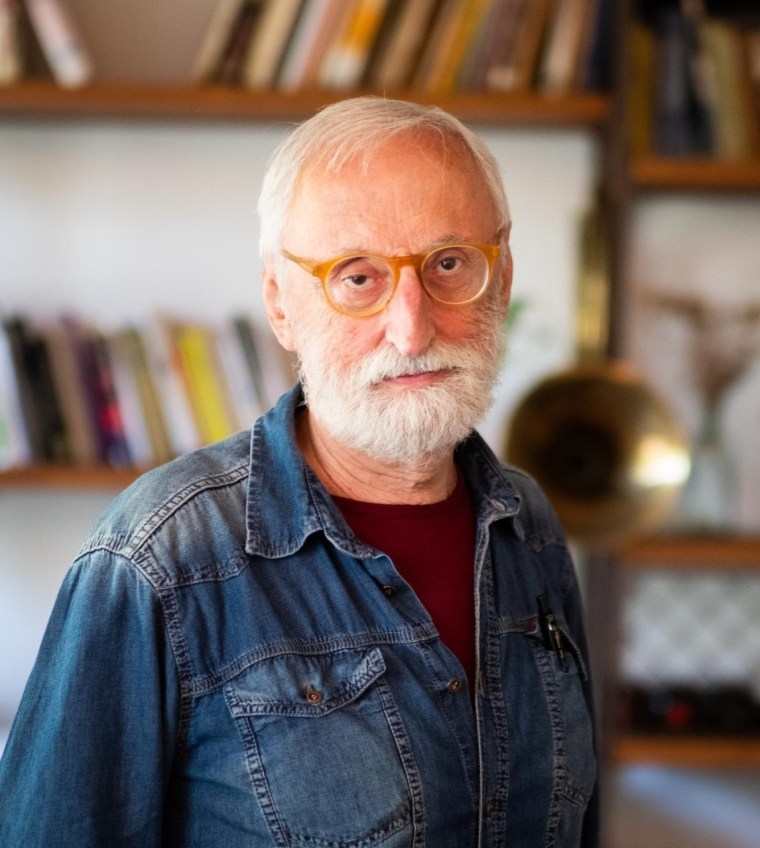
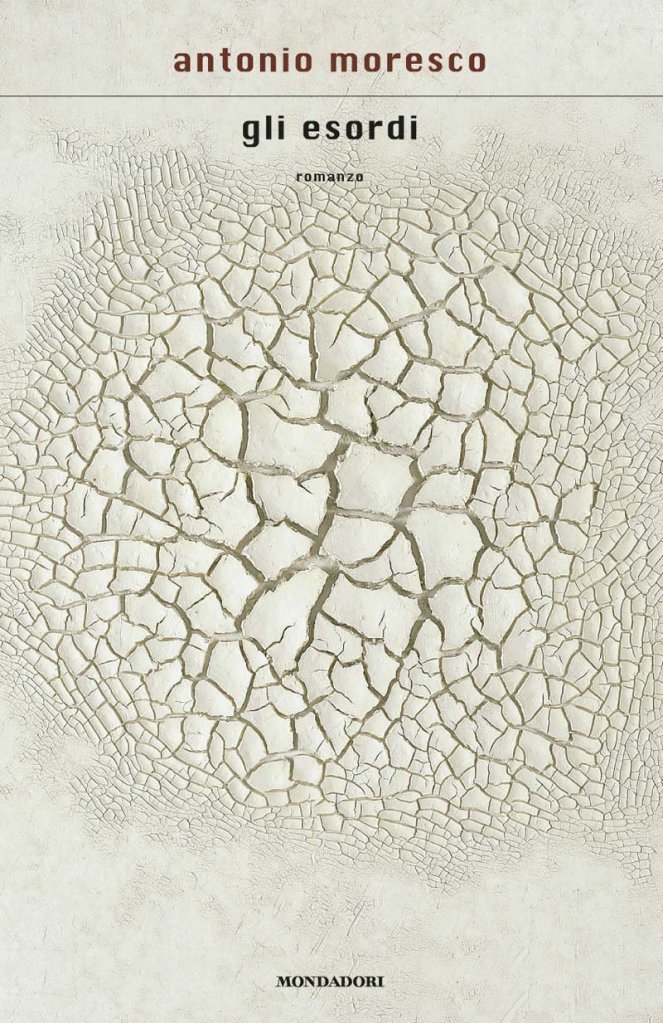
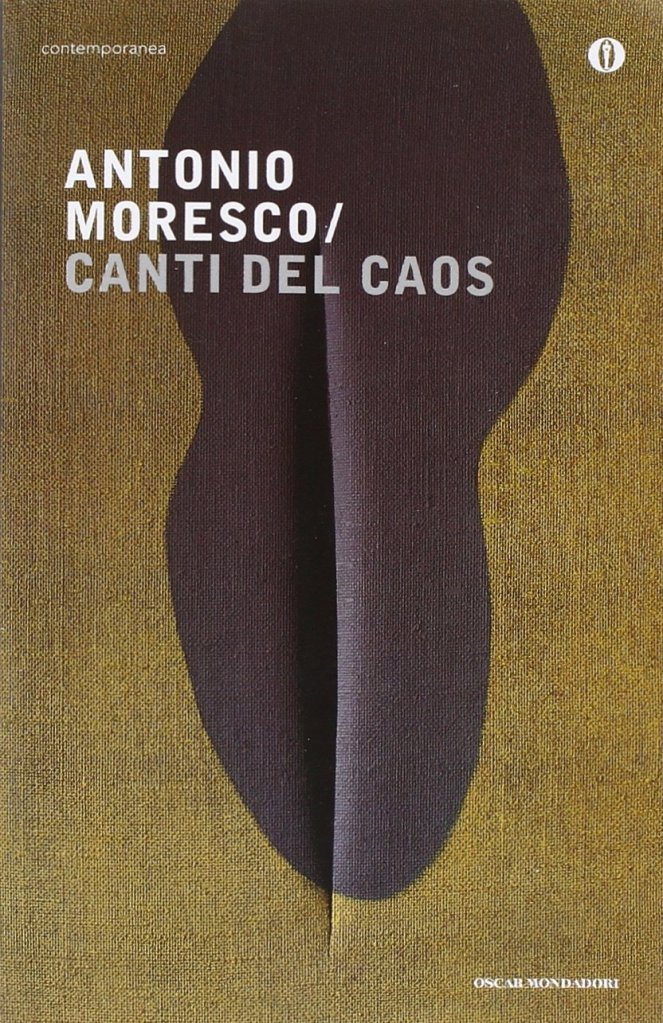
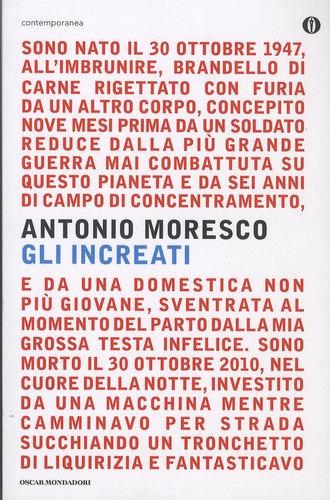
Antonio Moresco was born in Mantua in 1947. He has been translated into numerous languages and has established himself as a singular author of the Italian scene. Among his vast body of novels, essays and plays, there’s the trilogy Giochi dell’eternità (Games of Eternity), consisting of Gli esordi (The Beginnings), Canti del caos (Songs of Chaos) and Gli increati (The Uncreated Ones). Some of his works in English translation include Distant Light and Clandestinity.
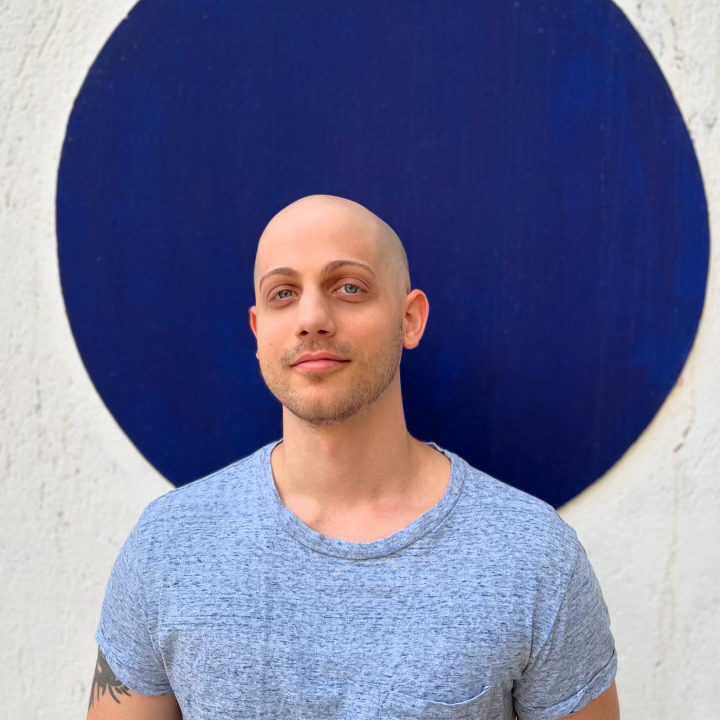
George Salis is the author of Sea Above, Sun Below. His fiction is featured in The Dark, Sci Phi Journal, Hobart, and elsewhere, and has been translated into Russian and Brazilian Portuguese. His criticism has appeared in Isacoustic, Atticus Review, and The Tishman Review, and his science article on the mechanics of natural evil was featured in Skeptic. After a decade, he has finished working on a maximalist novel titled Morphological Echoes. He has taught in Bulgaria, China, and Poland. He’s the winner of the Tom La Farge Award for Innovative Writing. www.GeorgeSalis.com.
George Salis: Sei stato rifiutato dagli editori e hai scritto nell’ombra per circa 15 anni prima di pubblicare il tuo primo libro all’età di 45 anni. Hai trovato una particolare libertà in questa condizione di oscurità? Trovare finalmente un editore ti ha dato un senso di rivalsa? Più in generale, puoi raccontarmi quel periodo in cui c’eravate solo tu e le parole, tu e la scrittura?
Antonio Moresco: E’ stata la mia disgrazia ma anche il dono che ho ricevuto come scrittore, perché questo lungo periodo sotterraneo e di totale esclusione e rigetto da parte del mondo culturale ed editoriale italiano mi ha permesso di stare esplosivamente vicino a me stesso, di incontrare e di riconoscere la mia voce, di forgiare e di mettere alla prova la mia vocazione di scrittore attraverso il combattimento, il combattimento e l’adorazione.
GS: Hopefulmonster ha pubblicato il tuo libro I Due alla fine del 2025, in cui “uno scrittore e il suo traduttore si scontrano e vengono raccontate le loro miserabili e ammirevoli vicende”. Pensi che il rapporto teso che può esistere tra scrittore e traduttore sia simile a quello tra scrittore e lettore? Dopotutto, i lettori forse non traducono nel senso convenzionale del termine, ma interpretano comunque le parole e le immagini dello scrittore, spesso in modi che possono mutare o persino mutilare il testo.
AM: E’ così. Come il traduttore, così anche il lettore interpreta e piega il testo ai propri desideri e bisogni .A me -come credo a molti altri scrittori- capita spesso di leggere recensioni o di sentire giudizi sui miei libri che mi sbalordiscono tanto sono o mi sembrano lontani dalle mie intenzioni. Ma è bene che sia così, è bene che ci sia questa libertà e questo rischio nel rapporto tra un testo e i suoi lettori, che l’opera di uno scrittore non sia sottoposta a una rigida interpretazione canonica autorizzata, come succede spesso coi libri sacri, dove si creano caste di persone che traggono il proprio potere sacerdotale dal presentarsi come le uniche autorizzate a fornire la giusta interpretazione di un testo. Tra l’ortodossia e il rischio, preferisco il rischio.
GS: Sei stato descritto come il fondatore della letteratura italiana moderna. Ti senti più affine agli scrittori italiani contemporanei oppure a quelli che ti hanno preceduto, come Italo Calvino o Anna Maria Ortese, per esempio?
AM: Io mi sono formato sugli scrittori del passato che ho letto dopo i trent’anni e dopo dieci anni di deragliamento. In questo periodo, in un monolocale alla periferia di Milano, ho ripercorso tutta la letteratura, fin dall’inizio, da solo, perché avevo avuto una disastrosa esperienza scolastica e non avevo fatto l’università. In questo viaggio solitario mi avevano affascinato soprattutto i tragici greci, Erodoto, Senofonte, l‘Iliade, e poi Cervantes, Swift, Balzac, Stendhal, Dostoevskij, Tolstoj, Melville, Kafka… Poeti come Emily Dickinson, Rimbaud… Ma anche scrittrici antiche come Murasaki, epistolari di pittori, libri e diari di mistiche… Degli italiani -a parte i miei amati Dante e Leopardi- mi avevano conquistato romanzi novecenteschi come La coscienza di Zeno, Con gli occhi chiusi, La cognizione del dolore, Il conservatorio di Santa Teresa, Horcynus Orca, le opere di Primo Levi… Perché certe volte bisogna guardare indietro per vedere avanti, certe volte i nonni sono più rivoluzionari dei padri.
GS: Qual è un romanzo che hai letto e che pensi meriterebbe più lettori? Perché?
AM: Ce ne sono tanti. Per esempio diversi tra quelli che ho nominato prima. Perché spesso i lettori hanno paura di ciò che porta perturbamento, drammatica apertura dei possibili. Preferiscono non essere messi alla prova, essere intrattenuti senza sorprese in attesa della propria morte, preferiscono il deja vu, le strade consuete piuttosto che l’ignoto, supportati in questo da un’industria del libro spesso priva di ardimento, che ha fatto del volare basso il proprio emblema, mentre la letteratura dovrebbe portare nel mondo l’avventura, l’esplorazione, lo sfondamento dei possibili, soprattutto in questa epoca, in questo momento cruciale per la nostra vita: personale e di specie.
GS: La tua trilogia Giochi dell’eternità è un’opera monumentale, il lavoro di una vita, frutto di oltre tre decenni di immaginazione in fiamme. Puoi parlare della concezione e della realizzazione di questa trilogia? Ti eri imposto questo compito mastodontico fin dall’inizio? Oppure l’opera si è espansa e accumulata in modi che non avevi previsto? Hai mai avuto la sensazione che i libri stessero diventando incontrollabili?
AM: Questa vasta opera in tre grandi parti è stata scritta nell’arco di 35 anni e ha avuto uno sviluppo più simile alla progressione delle cellule staminali ed equipotenti che a un progetto e a un programma cosciente, prevedibile, controllato e definito fin dall’inizio. Scriverla è stata anche per me un’avventura, una scoperta, un rischio, un addentrarmi in zone sconosciute senza rete di protezione, un’invenzione del mondo senza la quale non avrei potuto vedere il mondo e renderlo dicibile attraverso la letteratura. Era incontrollabile non nel senso che non avesse dentro di sé la propria visione, ma nel senso che mi oltrepassava, che doveva inventarsi da sé la propria regola, anche a dispetto del suo autore e dei suoi limiti di conoscenza.
GS: Molti scrittori contemporanei sembrano trovare forza nella sottrazione e nella rarefazione, mentre i tuoi libri si espandono e crescono fino a diventare organismi autonomi. Vedi il minimalismo come un fallimento del coraggio artistico?
AM: Non necessariamente. Ci sono libri buoni e libri mediocri in entrambi i campi. E ci sono scrittori definiti minimalisti -come ad esempio Cechov- che invece, dietro la loro mitezza, sono intrepidi, radicali. Bisogna distinguere tra scrittore e scrittore, al di là dei raggruppamenti simili a insiemi matematico in cui vengono collocati dalla critica. L’infinitamente piccolo e l’infinitamente grande certe volte si specchiano l’uno nell’altro. C’è un punto di contatto atomico dove massimo e minimo si incontrano, sono una cosa sola.
GS: Dall’estrema destra fascista negli Stati Uniti al partito neonazista Alba Dorata nella mia Grecia, l’autoritarismo sembra oggi più diffuso e alla moda nel mondo che in qualsiasi altro momento della storia recente. Qual è la tua visione della situazione politica in Italia e all’estero, e pensi che la letteratura possa essere un modo efficace per contrastare queste tendenze dispotiche?
AM: Tira una brutta aria. Fantasmi e demoni che si credevano estinti dopo l’orrore del Novecento hanno invece ripreso a bollire nella pancia dell’Europa, degli Stati Uniti e del mondo. Sembra che il mondo umano sia preda di una rimozione e di una follia suicida, di quella che Freud chiamava “pulsione di morte”. La letteratura può almeno tenere aperta la crepa, la ferita, la breccia attraverso cui respirare sotto le macerie di questo mondo terremotato e invivibile, in questa epoca in cui alle vecchie tirannidi di ritorno si stanno aggiungendo le nuove e pervasive tirannidi tecnologiche, che si stanno paurosamente saldando con le prime.
GS: Questa è una domanda di un ospite, Federico Ciriminna: “Molti dei tuoi libri nascono da un confronto profondo con l’oscurità, la disperazione e i limiti dell’esistenza. Hai parlato apertamente del fatto di aver conosciuto tu stesso la disperazione. Sono curioso di sapere come funziona il tuo processo creativo: quando scrivi, senti che l’atto della creazione è anche una forma di trasformazione? C’è qualcosa di salvifico nel processo stesso? La scrittura può diventare un modo per attraversare la disperazione, o addirittura andare oltre, oppure è semplicemente un modo per dare alla disperazione una forma e una voce?”
AM: E’ vero, nella mia vita ho conosciuto periodi di profonda disperazione e, più in generale, e anche adesso, la disperazione non mi abbandona mai ed è la mia ferita ma anche la mia cura. Però non credo che ciò che scrivo (e ciò che hanno scritto nel passato scrittori e poeti che hanno conosciuto la disperazione) sia solo espressione di questa disperazione e che la loro letteratura sia una sorta di cartella clinica. Mi ostino a credere -a differenza di quanto si sente dire- che il dolore non sia sterile. Nell’opera degli scrittori e poeti che amo -come per esempio Dante e Leopardi- si vede la loro ferita ma si vede anche come da questa ferita si forma la perla.
GS: Se potessi scegliere uno dei tuoi libri da tradurre in tutte le lingue, quale sceglieresti e perché?
AM: Il primo che mi viene in mente è La lucina, il mio libro finora più tradotto. Però, se mi fosse concesso sceglierne anche un altro, direi Canti del caos, il libro centrale di Giochi dell’eternità e che può sostenere anche una pubblicazione autonoma. E’ apparentemente l’opposto de La lucina: quanto il primo è intimo e formalmente limpido, tanto l’altro è debordante, figurale, esplosivo. Questo mio libro non è stato finora pubblicato in un altra lingua, però in questo momento è in traduzione negli Stati Uniti e in Spagna.
GS: A cosa stai lavorando adesso? Oppure, per dirla in un altro modo: cosa stai ancora cercando di scoprire attraverso la tua scrittura?
AM: In questo momento sto scrivendo un romanzo segreto che -a guardare la mia opera dall’esterno- sarebbe perfetto come mio ultimo libro e, meglio ancora, come opera postuma. Ma, perché questo possa avverarsi, dovrei morire in fretta. E allora magari qualcuno, o qualcuna, frugando tra le mie carte con le sue manine, troverebbe questo sconcertante libro inedito, comincerebbe a leggerlo con crescente stupore e penserebbe: “Accidenti, questo vecchio scrittore aveva ancora in canna un libro così!”
GS: I matematici dicono che alcuni infiniti sono più grandi di altri. Quando si parla di giochi dell’eternita, quale pensi sia il più potente, quello destinato a durare più a lungo: l’atto della scrittura, l’atto della procreazione o qualcos’altro? Questa intervista è un gioco dell’eternità?
AM: La risposta alla prima domanda è: l’increazione. La risposta alla seconda domanda è: sì.

