
Editor’s note: The following interview, conducted via email, began in late 2007 and was completed by February 2008. The questions were created by Louis Bourgeois and Zachary Bush, under the auspices of their organization, Vox Press.
Louis Bourgeois: I understand that you were born and raised in Oakland, California in the mid-40s; if you wouldn’t mind, could you please expound upon some of your early memories of growing up in the Bay Area at that time and how, if in any way, they influenced your earliest poetry?
Stephen Morse: It’s true. I was born in the Oakland Naval Hospital while my father (Herbert Spaulding Morse Jr.) was away fighting the Japanese in January of 1945. I was about 5 when he returned to the States, moved us out to the suburbs. It would take a psychoanalyst to fully explain my father’s influence on who I became and what I write. There are two definite tones in my writing, a very clear-cut dark and light, anger and romantic. Though I am not bipolar, my poetry is. My father’s anger—sudden and unexplainable—and his charm as a storyteller echo about in much of my poetry.
LB: Who were some of your earliest influences?
SM: Early on I was very taken with Mother Goose nursery Rhymes, and Stevenson’s Garden of Verses, The Grimm Brothers’ red and blue book of fairy tales was amazing, and I recall at 5 reading The Odyssey. My father taught me to read at 5 and made me read the classics, and write a book report on what I had read. I wasn’t fond of the book reports, but I loved the reading. I very early had a solid grounding in traditional classical juvenile literature. By 7, I was writing stories of my own with not-so-heroic squirrels as the protagonists, surviving on their wits by stealing from stores. And finally, at around age 10, I discovered Sci Fi and read every piece of Sci Fi in the local library which included 1984, Brave New World, and other actual pieces of literature that just happened to be categorized in the library as Sci Fi.
I learned to look at things differently, to actually look and see beyond the ordinary words used to describe them. The earth became a planet in a solar system with certain unique characteristics. It wasn’t just where I happened to be.
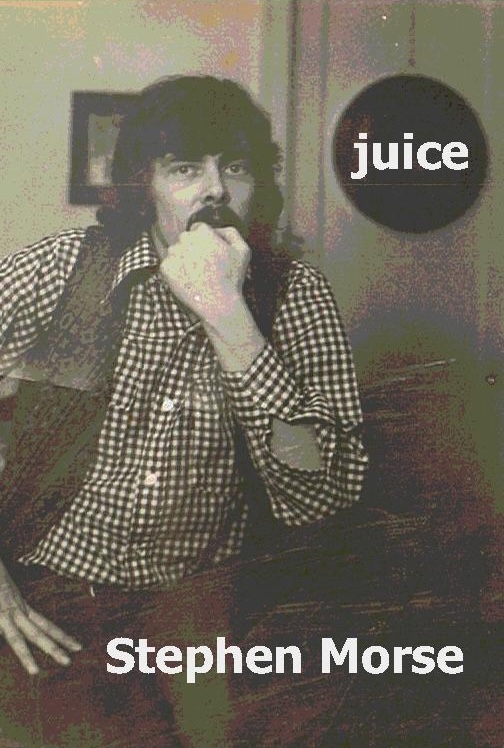
Those were the main literary influences pretty much until I was 17, graduated from high school, and went to the University of Oregon. What those blurbs about me that are scattered around the web don’t tell you is that my father bought a cattle ranch in Oregon when I was about 11, and I spent the next 6 years as a sort of cheap hired hand, the resident wood chopping, fence fixing, tractor driving, hay crew foreman and all around cowboy working for my dad for a $5.00 per week “allowance.”
The ranch was 5 miles from the nearest town by gravel roads. I’d bus to and from school 5 days a week, come home and do chores, and had little or no social life beyond school. I played football, and ran the mile on the track team mostly so I could get some time away from the ranch. I say all this because “The Ranch” has appeared in much of my work, and it’s most often the dark part. Alone, and in constant fear of my father’s quick and violent temper with nothing much around to buffer it, some dark strains got their start in those wet and unruly Oregon woods.
LB: When explaining my lifestyle or inner-workings as a poet, I sometimes explain a point where I crossed an invisible line, and considered myself a poet (publications or not), a point at which I could not “turn off” the process of either editing or composing poetry. Can you relate to this in any way and, if so, when did you “cross the line” and find yourself unable to “turn off” your creative processes? The question is, I suppose, when did you begin to consider yourself a true poet?
SM: I remember at about age 16 vowing that if I ever discovered a way to travel back in time that I would go back to tell my 16-year-old self what it is that I had become. I had this terrible gut ache of a feeling that there was something I was supposed to be doing. I just couldn’t identify it. It wasn’t until about 5 years later, after I had moved back on my own to the San Francisco Bay Area and was majoring in English at California State University, Hayward that I discovered what it was that I am. I took a creative writing class to satisfy an upper-division writing requirement (I didn’t want to write any more research papers).
The instructor was George Cuomo, a brilliant no-nonsense Italian writer who had a good personal relationship with some of the mainstream literary editors, including John Ciardi of the Saturday Review. There were 10 people in that class, 6 of whom—including myself—went on to be chosen for inclusion in an anthology of the best college writers in 1970. Our small group included more poets in that anthology than Stanford’s prestigious program for writers. We were a gifted group. I had already been published in the Saturday Review. My successes as a poet were early and came naturally for me. At 21 I knew I was a poet.
LB: I would assume that much of the art culture and artists’ perceptions of the world changed quite drastically from the mid-50s to the late 60s, especially in the Bay Area. What was it like witnessing these major changes in society, in your own backyard, at ground zero of the cultural revolution, if you could call it that? Please feel free to share any memories you have of this shift as it related to you as a young writer.
SM: Oh, God, did they change. I was on a ranch in Oregon during the late 50s and only heard rumors about the Beat movement, grossly distorted and filtered through television programs like Dobie Gillis. I used to attend lectures at the U of Oregon in Eugene just to get away and ended up studying a year’s worth of intro literature there before moving back to Oakland in 1963. It was a very solid intro that gave me a firm background in English and American literature up to about Elliot. I wrote a few sonnets just to see if I could. They were melodramatic and angst-ridden crap.
Ginsberg was a bombshell and I got exposed to a world that I never dreamed existed when I moved back to Oakland, and started taking trips over to North Beach in San Francisco to explore. I still didn’t know who I was or what I wanted to do, but I knew it was over there.
Somewhere amongst Coffee and Confusion (a folk coffee bar), The Hungry I, the Off Broadway, City Lights, The Spaghetti Factory; somewhere amongst the comedians, folk singers, poets, artists, fortune tellers, I knew it was a place to spend time, and I did. I first thought I wanted to be a folk artist traveling the coffeehouse circuit, but I was a fairly mediocre musician so that never went anywhere.
Somewhere around 1964 there was a huge cultural change. North Beach went from Folk singers like Phil Ochs, comedians like Lenny Bruce, and famous topless dancers like Carol Doda to a mecca for poets and characters like Ferlinghetti, Ginsberg, Kerouac, Michelene, Gary Snyder, Jack Hirschman, Richard Brautigan, Creeley, Thom Gunn, Dianne Di Prima, AD Winans, Paul Foreman, Gene Fowler, and on and on. I was studying these people at Hayward and meeting them in San Francisco. I still didn’t think of myself as a writer. But I knew who they were and it was fun to just hang on the fringe of what I was really too young to be doing. Drugs, alcohol, sex, anything decadent was good.
LB: How influential were the Beat poets to your early career? I hear that you had a bit of a friendship with a few highly respected poets back in the late 60s. Share with us some of these relationships, their dynamics, and any memories you have of this contact. Did these relationships with some of the Beat poets inspire or fuel your early writing? If so, then how?
SM: I was in a bit of two worlds…the poetry as a craft atmosphere of Cal State Hayward, lots of theory, and honing of pieces. We took poems apart and reverse-engineered the principles we found in them. We were very aggressively stealing poetic techniques and using them as our own. Then there was a group of about 30 people, a mixed bag of actors, artists, writers, musicians, and groupies who would meet every weekend on a ranch in the Hayward Hills. It was a gathering of hip culture of the Oakland side, though many worked at San Francisco radio Stations, Hollywood Studios, had their own presses, people like Ben Hiatt, Foreman, Winans, and who really knew because we were drinking wine, smoking various things, pot mostly, some opium, playing music all night long, reading poetry, arguing about what worked and what didn’t. I wasn’t much into labels, but some poets who have been loosely associated with the Beats, myself, Doug Blazek, and Clifton Simms were there.
Then of course there were the official San Francisco Beats. I read with them at a San Francisco library a couple of times though I didn’t really think of my work at the time as being very oral. I liked the way it looked on the page, how that look walked with the words in nice tight rhythms, the images conjured. My connections with the San Francisco side strengthened when I went to graduate school at San Francisco State University in the 70s.
LB: While attending graduate school at San Francisco State University, you studied under the great one-eyed poet Robert Creeley, correct? I have read enough Creeley to know that I love his work. What was it like being instructed by him? Did you spend much time in his presence outside of classes? Please feel free to share any stories about this relationship. We are very interested in any connections that you might have had with Creeley and the other Beat writers of the Bay Area.
SM: Yes, I studied with Creeley. It was a semester class that met twice a week for a total of 5 hours a week, at least officially. We met on campus the first class, and then agreed to hold class in an off-campus apartment so we could drink wine and get away from the formality of the classroom environment. The class was fascinating because there were always extra people hanging around because Creeley was there…I remember one young blonde woman reciting a poem about a hooded snake that she was seducing with her language and touch…a pretty blatant pass at Creeley, about which he commented later, saying she was looking for a poet. There was very little theory discussed; it was mostly Creeley gossiping about poets that he knew and he seemed to know everyone. He told a funny story about Jack Hirschman who was always mad at Creeley, Ginsberg, and that crowd because he thought they had a secret for writing poetry that they were withholding from him. We could all relate to the story because people/students/young poets were always looking for the formula that would produce great poetry. They were never very happy to hear that the formula was paying attention.
I did go drinking with Creeley once outside of class. We went to a longshoreman’s bar down on the wharf, and it wasn’t long before Creeley aggravated this guy who looked like a linebacker for the Raiders. I was minding my own business, but I heard Creeley say, “Yeah, I’m a poet, want to make something of it?” I’m not sure who swung first, but we were suddenly in the middle of a bar brawl. I don’t go out of my way to get into a fight, but I can take care of myself…anyway to make a long story short, we were saved by the bartender who threatened to break us all into pieces if we didn’t get out. We got out. Creeley thought it was funny. I wasn’t convinced. Later, I was told by one of his buddies that Creeley liked to get into bar brawls. Wanted to show that poetry wasn’t for sissies. Shades of Bukowski, but Creeley didn’t think much of Bukowski. Both he and Gary Snyder felt that Bukowski’s work was a lot like an onion, if you peel off a layer, there’s another layer just like it…onion to the core.
LB: I have seen it stated in various places that some of the older Beat writers embraced you as a poet and told you, more or less, that you could write in any fashion that you pleased? That is some pretty valuable advice. So, I am curious; who were some of these writers?
SM: That was pretty much what the consensus was amongst a lot of writers; learn the craft, then forget it. I believe it was actually Thom Gunn who told me that poets are good in spite of what they think they know about poetry, not because of it.
LB: After reading your poetry, it would seem apparent, through almost all of your work, that you pushed your poetry into the avant-garde and more experimental styles. How would you describe the type of poetry you write? Would you consider yourself to be an “experimental” poet?
SM: As I’ve implied previously, my poetry comes from experience and observation. So my life is so inextricably a part of anything I do. I get pleasure out of learning and playing with forms, like sonnets, sestina, and villanelles, haiku, senryu, whatchamaku…. But I always try to take them places they wouldn’t go in the hands of traditionalists. I’m infatuated with synchronicity, the notion that at any given moment there is a connection to all things in that moment, that if I can see the details and feel the emotions of the moment in the things around me, the ones that speak to men, then I am by extension tuning into all significant things of that moment.
That for example is how I read W.C. Williams poem:
The Red Wheelbarrow
so much depends
upon
a red wheel
barrow
glazed with rain
water
beside the white
chickens.
Williams was trying to catch the essence of the situation that he was in through the images around him. As you know, Williams was a pediatrician, made house calls, and was on that day attending to a sick young girl on a ranch outside of town. She had scarlet fever, and he had done all he could do. It was just a matter of waiting. He stood there, looking at the things, and thinking how much depended on the ideas in those things.
It was a form of imagism. I have taken it a slightly different direction. I retain the focus on the feeling and the whole gestalt of the situation that I’m trying to recreate through sound and language—the senseme of the poem. I think that form becomes secondary if the senseme is kept firmly in mind. I can put the poem in many forms/boxes and as long as the senseme remains, the poem can function. It’s a seeing and a feeling.
LB: After writing for more than three decades, how many poems do you think you have composed?
SM: Thousands, a large percentage of which have just drifted away because for many of the years that I wrote, I deliberately emphasized the process and was not too concerned with the product. Being a poet is like being a singer, the magic is in the making and sharing. Once it is written down, it becomes an artifact.
LB: I have heard you refer to yourself as an “American Poet.” Could you please explain exactly what you mean, outside of the obvious of being born in America? What, in your opinion, makes an “American Poet?” Do we have any more left?
SM: I am an American Poet because the complexity of America is a part of my experience. I have been a cowboy, worked in a plywood mill, studied at Universities, been supported by wealthy patrons, met and published brilliant poets, and scientists, including a Nobel Prize winner, hosted a television news show, produced commercials, run retail stores, caught a 750-lb Marlin, been the endorsed democratic candidate for the state house, taught college classes, nearly drowned in the Caribbean, skied some the best mountains on the West Coast, acted in local theater, wrote a 3-act play that was produced locally and picketed, married a talented poet, Judy Brekke, raised a son, have a beautiful granddaughter, and much more…but the point is you write about what you know, feel, understand, do, and live. I think the American experience is a uniquely rich one…though it is currently being threatened by fear-mongers. There is a fierce independent streak and a willingness to explore new ways of seeing that is I believe unique to American literature. We take what we want from the past.
LB: As a young poet, I am so very humbled by the few writers who have not only been able to sustain and produce work decade after decade, but grow into better writers year after year, avoiding predictability and dullness. If you could, explain who or what has helped you progress as an artist over a span of three-plus decades?
SM: I would not be writing as I do today if it weren’t for the close tie that Judy and I share that allows us to be honest about the work we do. It’s a mutual respect. We try our new works and ideas out on each other. We are each other’s ideal readers.
I also think that focus on the senseme is a way of escaping typical ways of writing. Sometimes a successful poem traps you into trying to repeat the success. If you just look at how it’s assembled, then you end up building the same box over and over, but if you realize that it was the senseme, the impulse, that drove the poem, then you go back to living and experiencing which is where the poetry is generated.
LB: I understand that outside of writing, editing, and publishing poetry, you have also taught. Do you enjoy teaching poetry and writing?
SM: I have taught at Brown College in Minnesota for the last 19 years, and I have enjoyed it very much. I get to speak of things that interest me, and the students are obliged to listen.
LB: Who are some of your favorite modern-day writers, and why?
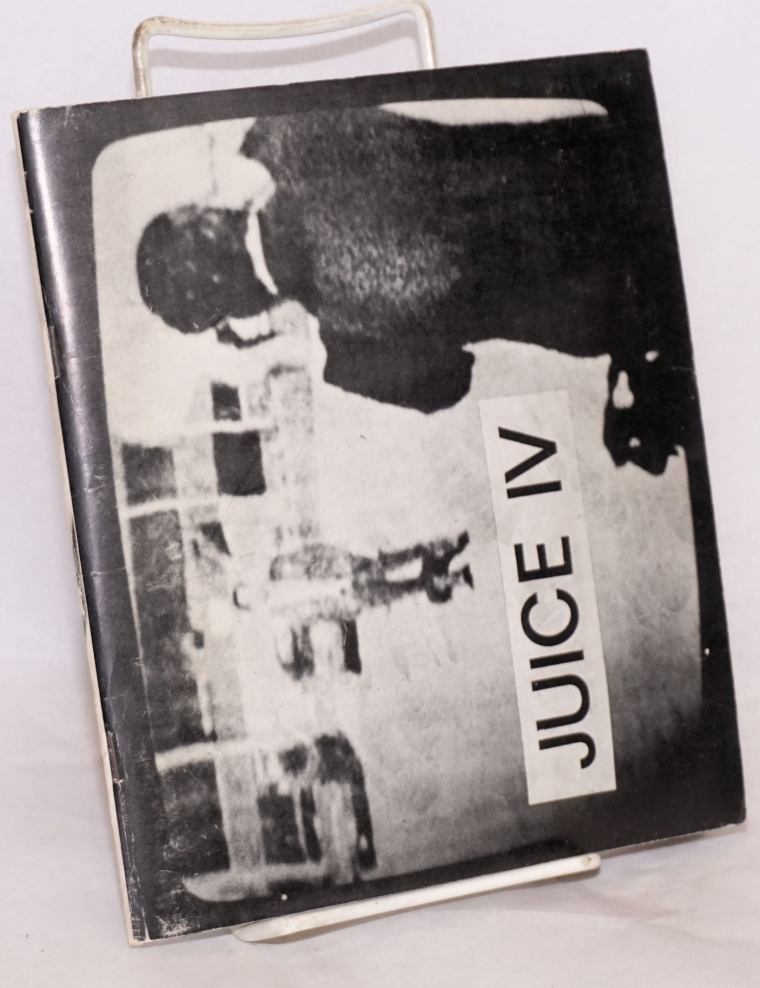
SM: This is a question best answered by reading Juice. I publish a lot of my favorite writers. It’s a bit like asking who my favorite musicians are. There are so many who move me that I don’t want to make an incomplete list.
LB: What are your opinions on the current state of poetry and what do you think will become of it in the future? Do you see any chance for future literary movements, such as the Surrealists or Beats?
SM: Poetry in the United States is undervalued, misunderstood, and so scattered as to be nothing more than cultural dust on the furniture of the arts. This is largely an effect of the academics; they have emasculated poetry by trying to explain it. A poem doesn’t need to be explained. It needs to be read and felt. But since almost the only credibility that a poet gets is through academia’s stamp of approval, you have this vicious circle of effete politically correct cookie-cutter poetry.
***
Editor’s note: Before publishing the above exchange, Louis Bourgeois wrote to me saying, “It just so happens I have discovered a lost poem of Morse’s that he had sent to us for project we were working on at the time.” Here is the poem:
The Catch
I once knew a girl who, having grown so terribly resentful towards The Sun, stole her father’s dwarf-moose trap and set it on her desk calendar. The girl, who was typically known for her extraordinary high level of impatience, was suddenly overtaken by an unusual wave of patience. Eager for a catch, she spent the next three days staring at the open jaw of the dwarf-moose trap. On the fourth day, early in the morning, the girl was startled by the sounds of something screaming, “6, 7, 8, 9…10:00 AM!” The girl jumped from her bed and ran to her desk calendar, where she found Thursday trapped and flopping between the shiny metal jaws of the trap. Thrilled at the sight of her prized catch struggling in front of her, the girl decided to spend all of Friday (which would have normally been Thursday if Thursday had not been caught in her trap) smoking a cigar, watching Thursday bleed to death. When Thursday finally passed, the girl drifted into deep contemplation. After a few hours the girl came out of her trance. It was then, and only then, that the girl realized she now possessed enough confidence to next catch The Sun. Though, the next time, she knew that she would need a much larger moose trap.

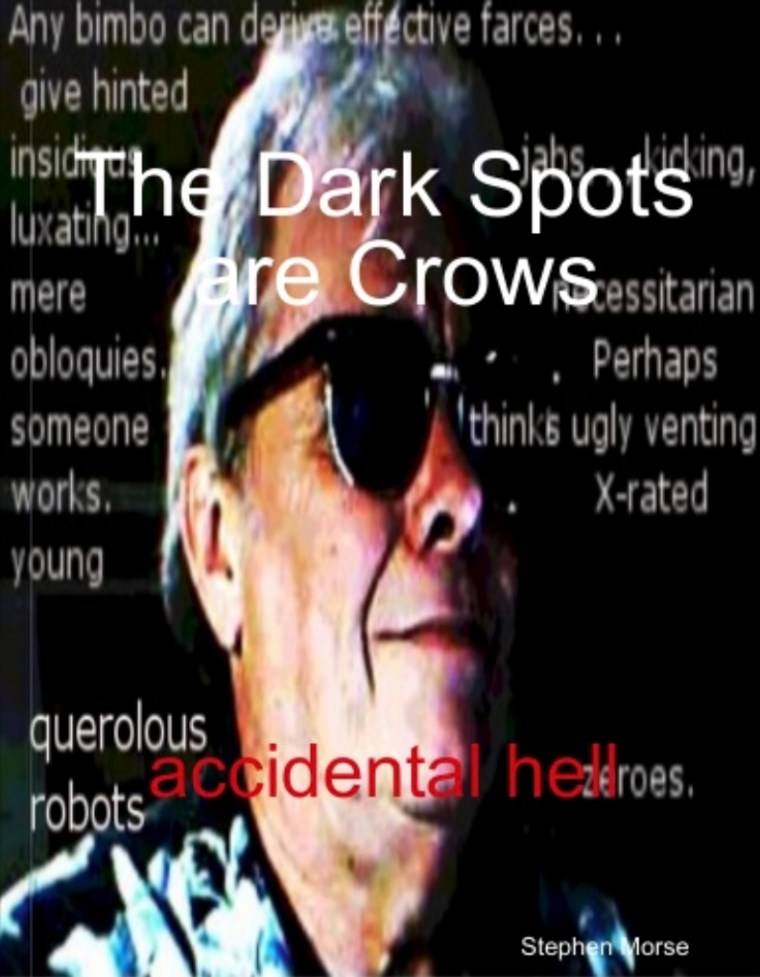
Stephen Morse (1945–2010) was an American poet, editor, and small-press publisher best known for founding and editing the poetry journal Juice. He studied at the University of Oregon, California State University (Hayward), and San Francisco State University. Morse was an active figure in the 1970s–80s small-press movement and helped publish experimental and emerging poets through Juice and related publishing work. His published poetry includes the later collection The Dark Spots Are Crows (2008), written while undergoing chemotherapy and treatment for stage four cancer.
Louis Bourgeois was born in New Orleans, Louisiana. He is primarily a poet, but he has published translations, fiction, memoirs, poetry and interviews in over two hundred magazines and journals in North America, Europe, and Asia. He graduated from Louisiana State University with a BA in English and was the first graduate of The University of Mississippi’s MFA program in Creative Writing. He is the Executive Director of VOX PRESS, as well as the Program Director for the Mississippi Prison Writes Initiative.


Enjoyed reading this interview as I do any interview with poets. I was born in 1945 and became Beat at the tender age of 11 when I first began writing poems. I’m surprised that I’ve never heard of Morse before but am glad that I now do. I thing the title of the interview, The Last American Beat, is a bit misleading because at the age of 80 I am still Beat and have always lived a bohemian lifestyle. I live in the medium sized city of Toledo, Ohio, and have two poet friends in their 80’s that are Beat and truly excellent poets, Nick Muska and Joel Lipman. In addition, there have been a few younger poets that have passed through town that I would consider to be Beat. That’s why I consider the title to be misleading as I believe there are other American Beats living throughout the country. I’m still writing and publishing and will continue to do so until I am a pile of dust and bone. Anyway, thank you for this enjoyable and informative belated interview. “The present day Beatnik refuses to die!”, to riff off of a phrase by Frank Zappa. – Bob Phillips
LikeLiked by 1 person